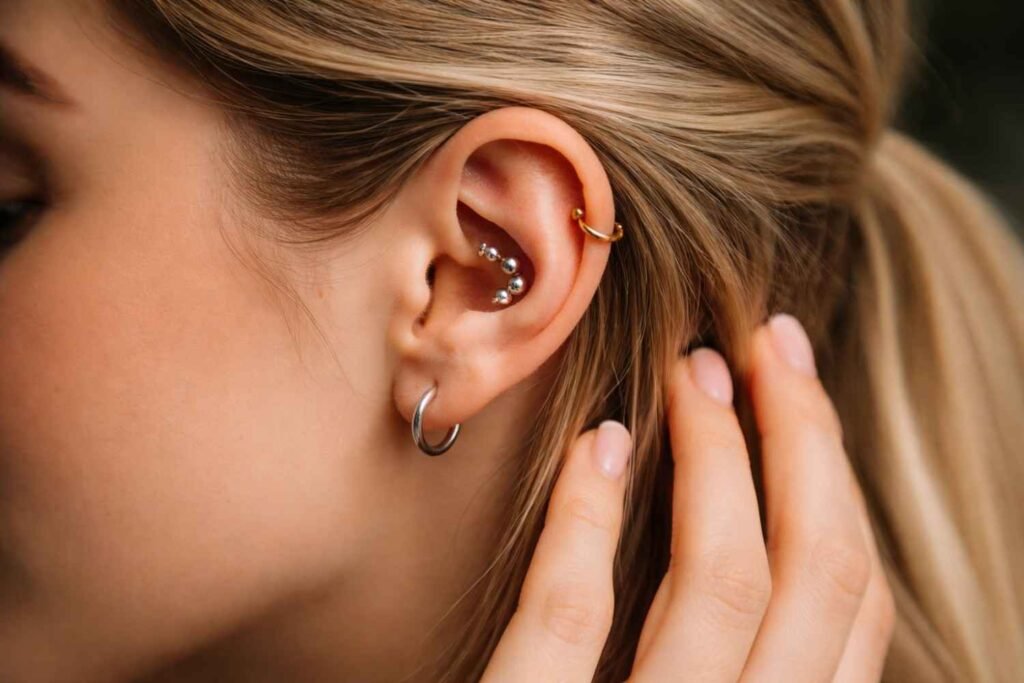
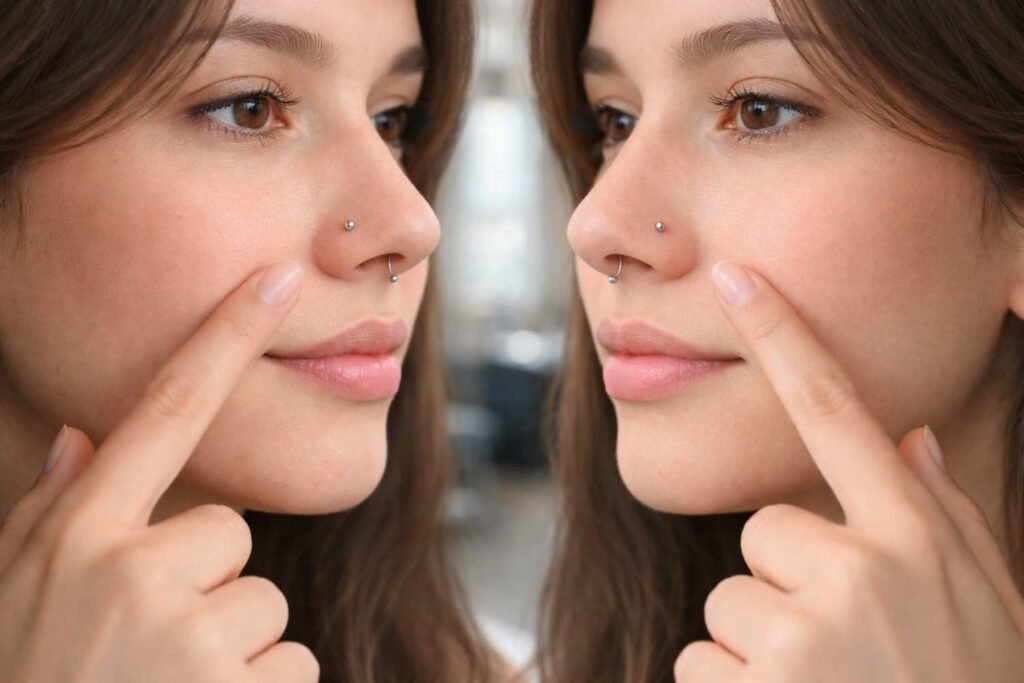
I remember staring at my reflection for days before getting my nose pierced. Not because I wasn’t sure about the piercing itself, but because I couldn’t decide where it should go. Left or right? Higher or lower? Subtle or bold? It turns out, placement changes everything. The same jewelry can look delicate on one person and striking on another, purely based on position.
Choosing where to pierce your nose is less about trends and more about harmony, how the piercing interacts with your features, your habits, and even how you move through daily life. There isn’t a universal “correct” spot. The best placement is the one that feels balanced on your face and natural in your routine.
Understanding The Most Common Nose Piercing Placements

Before deciding placement, it helps to know the main nose piercing options and what they visually communicate. Each location sits differently on the face and works with different jewelry styles.
Standard Nostril Placement
This is the classic spot most people imagine the curve or wing of the nostril. It suits both studs and hoops and works across almost all nose shapes. Because it sits on the outer contour, it tends to look soft and balanced rather than aggressive.
High Nostril Placement
Placed higher along the nostril curve, this variation feels more modern and editorial. It usually requires a stud because rings don’t sit comfortably at that height. High nostril piercings visually elongate the nasal bridge and draw attention upward, which can subtly change facial proportions.
Septum Placement
The septum sits in the soft tissue between the nostrils, often called the “sweet spot.” This placement is surprisingly versatile because jewelry can be visible or flipped up and hidden. It tends to create symmetry, especially for people who prefer centred facial accents rather than side-weighted ones.
Bridge Placement
This horizontal piercing sits across the upper nose bridge between the eyes. It’s bold and structural rather than decorative. Because it sits on surface tissue rather than cartilage, it carries a higher rejection risk and suits those comfortable with a more striking aesthetic.
Double Or Stacked Nostril
Two piercings on one side or one on each create layered styling. This placement has become more popular because it allows mixing studs and hoops for dimension without overwhelming the face.
Choosing The Side: Left Or Right?
One of the biggest questions people ask is which side of the nose to pierce. There’s no universal rule, but a few factors consistently shape the decision.
Most people instinctively choose their “photo side,” the profile they prefer in pictures. Faces aren’t perfectly symmetrical, so one side often feels more balanced or expressive. A piercing naturally draws attention, so placing it on the side you already favour tends to feel right long-term.
Visual balance also plays a role. If you part your hair consistently on one side or have a beauty mark on one cheek, placing the piercing opposite can distribute visual weight. It creates a subtle equilibrium across the face rather than clustering features in one area.
Sleep habits matter more than most expect. Piercing the side you don’t sleep on reduces pressure during healing and lowers irritation risk. Because nostril piercings take months to settle, nightly compression can noticeably affect comfort.
How Face Shape And Nose Anatomy Affect Placement
Piercing placement interacts directly with facial geometry. Even a few millimeters higher or lower can change perceived proportions.
If your nose bridge is narrow or straight, a mid-nostril placement tends to look refined and proportional. It sits naturally within the contour without widening the appearance of the nose.
For wider or rounder noses, slightly higher placement often looks more balanced. It draws the eye upward rather than outward, which visually elongates the center of the face.
Prominent nose tips usually pair well with lower nostril placement. Keeping the piercing closer to the curve softens the tip visually rather than emphasizing projection.
Lobe piercings depend heavily on anatomy. Not everyone has a pronounced sweet spot, so professional assessment matters. When placed correctly, septum jewelry sits centered and relaxed rather than forced.
How Jewelry Choice Changes Placement Decisions
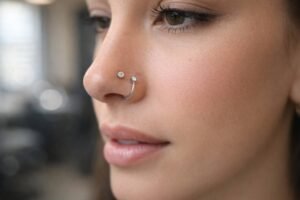
Placement and jewelry style are inseparable. A ring needs a different positioning than a stud to sit comfortably and look intentional.
Hoops generally require standard nostril placement because they need space to arc around the nostril edge. If placed too high, the ring pulls upward and looks tense rather than fluid.
Double piercings often mix a stud with a hoop, so spacing must allow both pieces to breathe visually without crowding.
Practical Factors People Often Overlook
Aesthetic decisions matter, but daily life affects satisfaction just as much. Placement interacts with routine in small but noticeable ways.
- Glasses wearers often prefer slightly higher nostril placement to avoid contact with nose pads.
- People who frequently wear masks or face coverings may find lower placements rub more.
- Active sleepers benefit from piercing the non-sleeping side
- Frequent allergy seasons can slow healing if nose irritation is constant
These details rarely appear in inspiration photos, but they shape comfort long-term.
A Simple Way To Decide Your Placement

If you’re unsure, a short experiment helps clarify preferences quickly.
Try temporary or faux jewelry and wear it for a few hours in different positions. Move it slightly higher or lower and observe how your face changes in mirrors and photos. Pay attention not just to how it looks but how it feels on your face.
A professional piercer then refines placement based on anatomy, cartilage thickness, curvature, and septum structure. Small adjustments often make the difference between a piercing that looks placed versus one that looks grown-in.
Modern Nose Piercing Placement Trends
Placement trends have shifted from single, centered studs toward layered and asymmetrical styling.
High nostril piercings paired with standard nostril pieces create vertical stacking. Double piercings on one side create curated asymmetry. Septum plus nostril combinations balance center and side accents.
These modern placements focus less on symmetry rules and more on facial flow, how jewelry guides the eye across features.
FAQs
1. Which side is best for a nose piercing?
There is no universal best side. Most people choose based on facial balance, preferred profile, or lifestyle factors like sleep position.
2. Does nose shape affect piercing placement?
Yes. Nose width, bridge height, and tip projection all influence which placement looks most proportional and balanced.
3. Can you change the placement later?
Yes. Nostril piercings can be redone in a different position after healing, though spacing and scar tissue should be considered.
4. Is septum or nostril placement more versatile?
Septum piercings are more concealable and symmetrical, while nostril piercings offer more jewelry and styling variety.
Final Thoughts
Where you pierce your nose is ultimately a personal alignment decision between your features, your habits, and your aesthetic instinct. Placement isn’t about rules or traditions unless you want it to be. It’s about noticing what feels naturally balanced when you see yourself from different angles and in motion. The right placement rarely looks dramatic or forced; it looks like it was always meant to be there.
If you’re uncertain, take time testing positions visually and consult a skilled piercer. A few millimeters of placement awareness can shape how the piercing lives on your face for years.