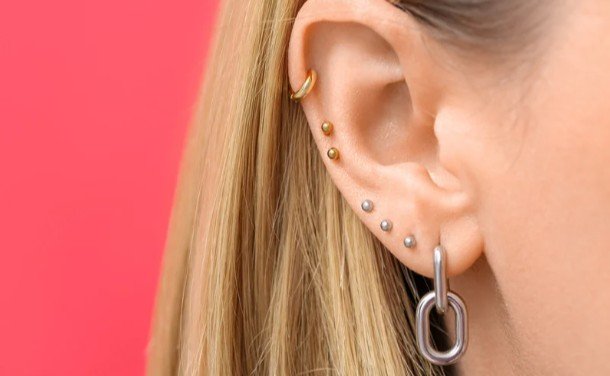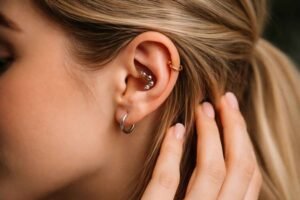
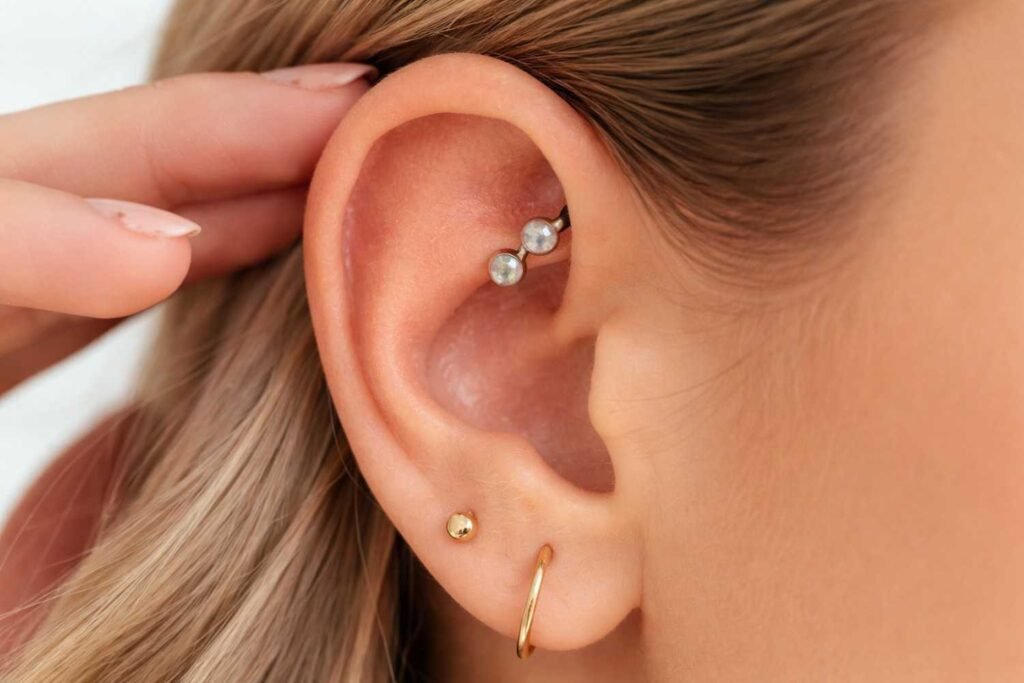
The first time I noticed a rook piercing up close, I almost missed it. It sits tucked into that inner ridge of the ear, not flashy like a helix hoop or obvious like a lobe stud. But once you see it, you realize why people love it. It adds depth to an ear stack. It looks intentional. And it feels a bit more personal than most cartilage piercings.
A lot of people consider a rook piercing after they’ve already had a few ear piercings and want something distinctive but still wearable for everyday life. It’s one of those placements that looks delicate but actually involves thick cartilage and a longer healing journey. So before getting one, it helps to know exactly what you’re signing up for: pain, healing, jewelry, and lifestyle changes included.
What Exactly Is a Rook Piercing?
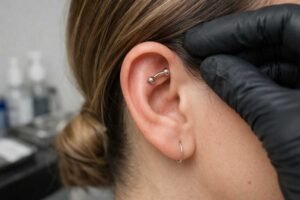
A rook piercing is a vertical piercing through the antihelix, the inner ridge of cartilage that sits just above the daith and slightly above the tragus. Because it’s positioned inside the ear fold rather than along the outer rim, it appears partially hidden, which is part of its appeal in curated ear styling.
Unlike outer cartilage piercings, the rook goes through a thicker double layer of cartilage. That thickness is why it tends to feel more intense during the procedure and takes longer to heal. Not everyone has a pronounced enough ridge to support it, so anatomy plays a big role in whether it’s even possible.
How Painful Is a Rook Piercing?
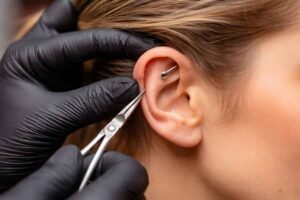
Pain is subjective, but rook piercings are generally rated between 5 and 8 out of 10. The sensation is sharper and more pressured than a lobe piercing because the needle passes through dense cartilage rather than soft tissue.
Most people describe three distinct sensations:
- A sharp entry pinch
- Deep pressure as the needle passes through cartilage
- A dull ache for several hours afterward
The pain itself is brief. What tends to surprise people more is the soreness in the first week, especially when smiling, chewing, or accidentally brushing the ear.
Healing Time and Healing Stages
Rook piercings heal slowly because cartilage has limited blood flow. Initial healing usually takes 6 to 12 months, with full internal stabilization sometimes extending to 18 months.
The healing process typically moves through recognizable stages:
Early phase (0–4 weeks): swelling, tenderness, warmth
Settling phase (1–4 months): reduced pain but still fragile
Maturation phase (4–12+ months): minimal symptoms but not fully healed
One of the most common mistakes is assuming it’s healed once it stops hurting. Cartilage often feels fine long before it’s structurally stable, which is why early jewelry changes cause setbacks.
Jewelry Used for a Rook Piercing
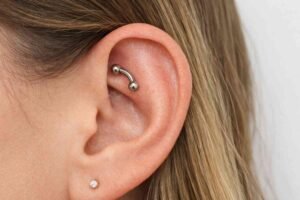
Professional piercers usually perform rook piercings with a 16-gauge sterile needle. The standard starter jewelry is a curved barbell, often called a banana bar.
This shape matters for healing. Rings move more and create rotational friction, while a curved barbell stays aligned with the piercing channel and allows room for swelling.
Once fully healed, jewelry options expand:
- Seamless hoops
- Clicker rings
- Decorative curved barbells
- Captive bead rings
Material quality is crucial. Implant-grade titanium and solid gold are preferred because they reduce irritation risk during long healing periods.
Who Is (and Isn’t) a Good Candidate?
Anatomy determines eligibility more than preference. The antihelix ridge must be thick and prominent enough to safely support the piercing channel. If the fold is too shallow, the jewelry can migrate toward the surface.
A rook may not be suitable if:
- The inner ridge is flat or minimal
- The ear structure is very tight
- You regularly use in-ear headphones for long hours
- You sleep heavily on one side
- You already have multiple nearby cartilage piercings healing
A professional assessment is always necessary before booking.
Aftercare and Daily Life Adjustments

Cartilage piercings have a higher infection risk than lobe piercings, so consistent care is essential. Proper rook aftercare is simple but strict.
- Clean twice daily with sterile saline.
- Avoid touching or rotating jewelry
- Keep hair products away from the area
- Do not sleep on the pierced side
- Avoid pressure from headphones or helmets
Lifestyle changes matter more than people expect. Sleeping on a travel pillow with the ear suspended in the center can prevent months of irritation. Even small habits like resting your head on your hand can slow healing.
Risks and Potential Complications
Rook piercings generally heal well when done correctly, but cartilage carries known risks. Infection rates are higher than with soft tissue piercings, and complications often come from movement or pressure rather than hygiene alone.
Watch for warning signs:
- Persistent swelling beyond several weeks
- Yellow or green discharge
- Increasing pain after initial healing
- Jewelry appearing closer to the surface
Migration is rare but possible if the anatomy is borderline or the jewelry is incorrect. Early evaluation prevents permanent scarring.
Cost Expectations
Rook piercing prices usually fall between $30 and $100 for the procedure itself. Jewelry is often separate and can significantly increase the total cost depending on the material.
Higher pricing typically reflects:
- Professional studio standards
- Implant-grade jewelry
- Sterile single-use needles
- Experienced piercers
Because healing is long, quality jewelry is not an area to cut corners.
Rook vs Similar Ear Piercings
People often compare the rook with nearby cartilage piercings. The differences affect both look and healing.
Rook: inner ridge, vertical, tucked appearance
Daith: inner fold below rook, curved placement
Faux rook: front-facing surface piercing above the rook
The rook sits deeper in the ear structure, which is why it feels more subtle and architectural in curated ear styling.
FAQs
1. Does a rook piercing hurt more than a helix?
Yes, for most people. The rook passes through thicker cartilage than the outer helix rim, so pressure and soreness are typically greater.
2. How long until I can change the rook jewelry?
Usually after 6–12 months. Even if pain is gone earlier, the internal channel may not be stable enough for jewelry changes.
3. Can everyone get a rook piercing?
No. Some ears lack a defined antihelix ridge. A piercer must assess anatomy before confirming suitability.
4. Why is my rook still sore after months?
Cartilage heals slowly and reacts to pressure. Sleeping on it, bumping it, or wearing headphones can prolong tenderness.
Final Thoughts
A rook piercing sits in that interesting space between subtle and striking. It’s not the first piercing most people get, and that’s part of its appeal. It requires patience, good anatomy, and a willingness to adjust daily habits for months. But once healed, it becomes one of the most distinctive placements in an ear stack, quietly visible, but intentionally placed.
If you’re drawn to it, that usually means it fits your style. Just be prepared for the slower healing journey that comes with cartilage.