I remember standing in front of my laptop trying to buy my first nose ring replacement and realizing I had absolutely no idea what size I needed. Every listing mentioned gauges, millimeters, and measurements that felt oddly technical for something sitting on my face. I thought a nose piercing was simple until I learned that choosing the wrong size could mean irritation, discomfort, or jewelry that simply wouldn’t fit.
That confusion is incredibly common. Most people walk out of a piercing studio without fully understanding sizing because everything feels fine at the moment. The questions usually come later when changing jewelry, ordering online, or wondering why one ring slides in easily while another refuses to cooperate. Understanding what gauge a nose piercing is removes that uncertainty and helps you make confident decisions long after the piercing heals.
Understanding What Gauge Actually Means
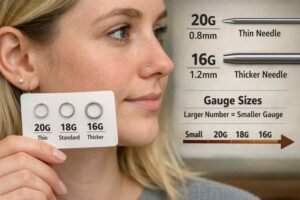
Before talking about sizes, it helps to understand what “gauge” refers to in piercing terminology. Gauge measures the thickness of the jewelry, not its length or diameter. The confusing part is that the numbering system works in reverse.
Higher numbers mean thinner jewelry, while lower numbers indicate thicker pieces. That single detail causes most sizing mistakes.
A 20G ring is thinner than an 18G ring, even though the number sounds larger. Once this clicks, everything else about nose jewelry sizing becomes easier to understand.
Why Gauge Numbers Feel Backward
The gauge system comes from traditional wire measurement standards used long before modern jewelry manufacturing. Instead of increasing with thickness, numbers decrease as the material becomes thicker.
In practical terms:
- 22G feels very delicate
- 20G is thin and common for daily wear
- 18G is slightly thicker and more stable
- 16G and 14G are noticeably thicker options
Knowing this helps explain why professional piercers often avoid extremely thin jewelry during healing.
Standard Gauge Sizes for Nose Piercings

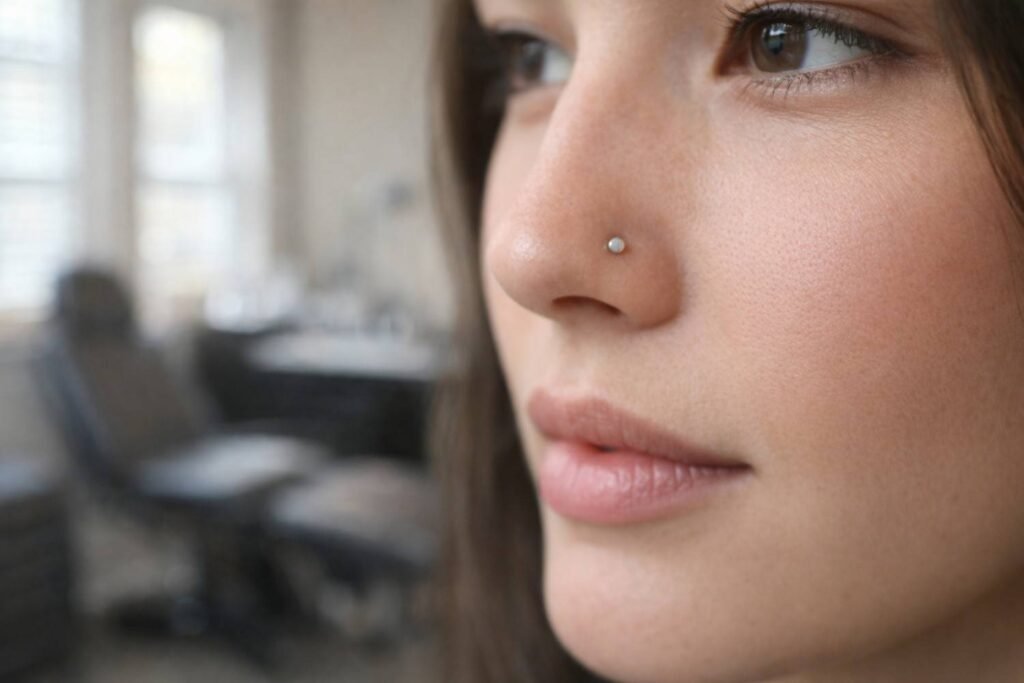
Most people want a direct answer first, so here it is: the standard gauge for a nostril piercing is typically either 18G or 20G.
Professional piercers commonly start with 18-G jewelry because it offers better stability while the piercing heals. Once fully healed, many people switch to 20G for lighter or more delicate jewelry styles.
Septum piercings, however, are usually thicker. Standard septum jewelry ranges between 16G and 14G, giving the piercing additional strength and visual balance.
Quick Gauge Reference
Here’s a simplified sizing overview used across most piercing studios:
- 22G (0.6 mm): very delicate jewelry, not recommended for new piercings
- 20G (0.8 mm): popular for everyday nose studs and thin rings
- 18G (1.0 mm): standard professional nostril piercing size
- 16G (1.2 mm): common for septum piercings or bolder nostril looks
- 14G (1.6 mm): thicker septum jewelry or stretched piercings
This range explains why two people with nose piercings may wear different sizes even when the placements look similar.
Why Piercers Usually Start With 18G

When I first learned that piercers intentionally choose thicker starter jewelry, it made much more sense why initial studs feel sturdier than fashion jewelry bought later.
Healing tissue benefits from stability. Slightly thicker jewelry reduces movement, lowers irritation risk, and helps the piercing form a stronger channel during early healing stages.
Some professionals even use a slightly larger needle to allow smooth insertion of 18-G jewelry without added pressure.
The “Cheese-Cutter” Effect Explained
Extremely thin jewelry may look appealing, but it can cause problems. Jewelry thinner than 22G can behave almost like wire under pressure, gradually cutting into the skin instead of sitting comfortably within it.
This phenomenon, sometimes called the cheese-cutter effect, can lead to migration or tearing over time. That’s why experienced piercers rarely recommend ultra-thin jewelry for long-term wear.
Downsizing, Shrinkage, and Jewelry Changes

After healing, many people switch sizes without realizing their rook piercing adapts to whatever they wear consistently.
Downsizing from 18G to 20G usually happens smoothly once healing completes. However, wearing thinner jewelry for long periods allows the piercing hole to shrink naturally.
What Happens When You Change Sizes Frequently
The body adjusts to pressure and space. If thinner jewelry stays in place for months, reinserting thicker jewelry later may feel difficult or uncomfortable because the channel has tightened.
This doesn’t mean damage occurred; it simply means the piercing adapted.
Understanding this helps avoid panic when jewelry suddenly feels tight after switching styles.
Gauge vs Diameter: The Most Common Confusion
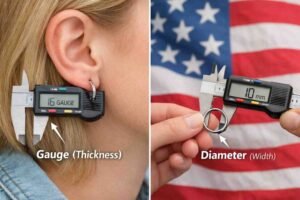
Gauge determines thickness, but diameter or length determines fit and comfort. Many sizing mistakes happen because people confuse these two measurements.
Hoops rely on diameter, while studs rely on post length.
Most nostril hoops feel comfortable around:
- 6 mm for a snug fit
- 8 mm as an average size
- 10 mm for a looser appearance
Starter studs are usually slightly longer to accommodate swelling during early healing weeks, which explains why initial jewelry may feel longer than replacements later.
Why Initial Jewelry Looks Bigger
Piercers intentionally choose longer posts at first to prevent swelling from embedding jewelry into the skin. Once swelling subsides, downsizing improves comfort and appearance.
What feels oversized initially is actually part of a proper healing strategy.
How to Know Your Current Nose Piercing Gauge
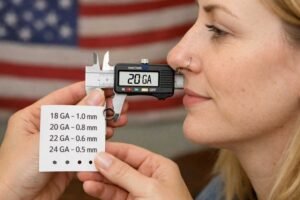
If you’re unsure about your size, there are a few reliable ways to figure it out without guessing.
You can:
- Ask your original piercer
- Compare jewelry measurements from previous purchases
- Visit a professional studio for sizing confirmation
- Use a jewelry sizing card or caliper tool
Avoid forcing jewelry into the piercing to test the size. Resistance usually means a gauge mismatch, not stubborn jewelry.
FAQs
1. What gauge is a standard nose piercing?
Most nostril piercings are done at 18G or 20G, with 18G commonly used for initial healing due to better stability.
2. Is 18G or 20G better for nose piercings?
Neither is universally better. 18G supports healing well, while 20G offers lighter jewelry options after the piercing fully heals.
3. Can I put a 20G ring in an 18G piercing?
Yes, in most cases. Thinner jewelry fits easily, but wearing it long-term may cause the piercing to shrink slightly.
4. Why won’t my new nose ring fit?
The issue is usually a gauge mismatch or incorrect diameter rather than swelling or improper piercing placement.
Final Thoughts
Understanding gauge sizing completely changed how confident I felt managing my own piercing. What once seemed like complicated terminology turned out to be a simple system built around healing, comfort, and long-term wear. Most problems people experience with nose jewelry don’t come from bad piercings but from not realizing how thickness, diameter, and healing stages work together.
Once you understand your gauge, buying jewelry stops feeling risky and starts feeling personal. You’re no longer guessing you’re choosing what actually works for your piercing.