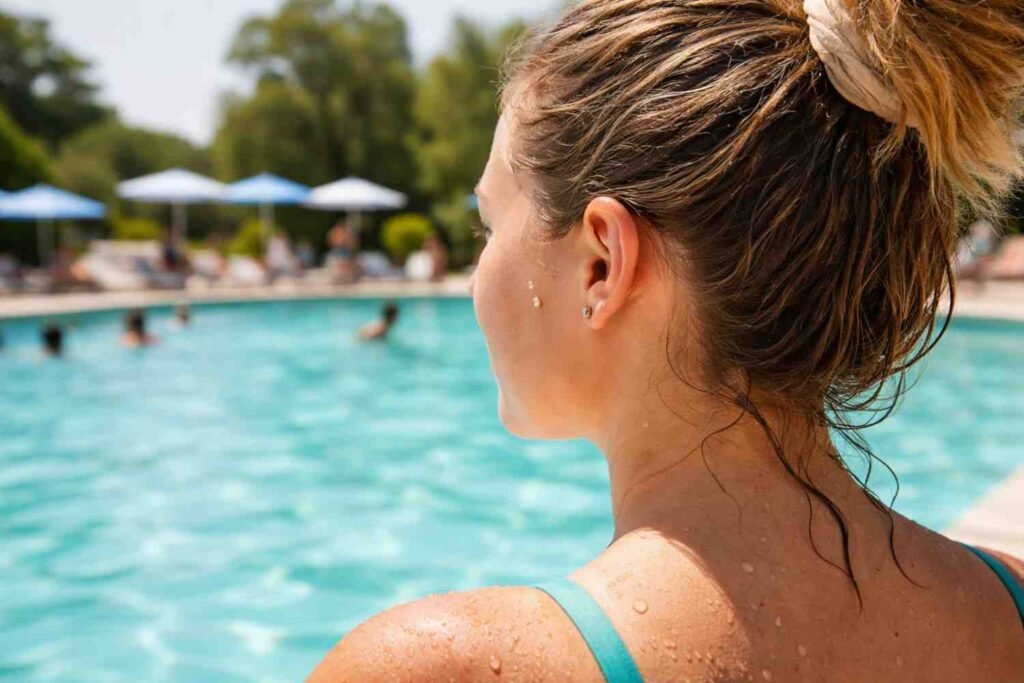
Getting your ears pierced feels simple in the moment. The appointment is quick, the jewelry looks great, and you walk out thinking life goes on as usual. Then reality hits, later showering feels risky, hair gets tangled, and suddenly you’re wondering if that beach trip or pool day you planned is still safe.
This question usually shows up at the worst time. Summer plans, vacations, kids’ swim classes, or even regular workouts make water exposure hard to avoid. And unlike other minor skin injuries, a piercing sits in a delicate spot that stays exposed all day. Understanding how long to wait before swimming and why it matters can make the difference between smooth healing and months of irritation.
The Real Answer: When Swimming Becomes Safe
Most professional piercers agree on one core rule: avoid swimming until the piercing has completed its initial healing phase. For earlobe piercings, it usually takes about 6 to 8 weeks. Cartilage piercings require far longer, anywhere from 3 to 12 months, depending on placement and individual healing speed.
The reason is straightforward. A new piercing is essentially an open wound. Even when it looks fine on the surface, the internal tissue is still repairing itself. Submerging it in water, especially shared or natural water, exposes it to bacteria and irritants before the skin barrier has sealed.
If swimming absolutely cannot be avoided, many piercers consider 2 to 3 weeks the earliest possible point when the wound has closed slightly. Even then, the risk remains elevated, and precautions are necessary.
Why Water Exposure Delays Healing

People often assume clean-looking water is safe. In reality, even treated water contains microorganisms and chemicals that interfere with tissue repair. Healing skin needs stability, dryness, and minimal irritation, the opposite of what swimming provides.
Water exposure affects a new piercing in several ways:
- Softens and weakens forming tissue
- Introduces bacteria into the channel
- Causes swelling from irritation
- Flushes away protective fluids
- Prolongs inflammation
Piercings are particularly vulnerable because cartilage has limited blood flow. Less circulation means fewer immune cells reach the area, so infections develop more easily and resolve more slowly.
Healing Time Differences by Piercing Type

Healing timelines vary widely depending on where the piercing sits and how the tissue behaves.
Frog eye piercings heal faster because the lobe contains soft, vascular tissue. Blood flow supports rapid repair, so the channel stabilizes within weeks.
Cartilage piercings heal slowly because cartilage is dense and poorly supplied with blood vessels. Even when pain fades, the internal channel can remain fragile for months.
Typical safe swimming timelines:
- Earlobe: 6–8 weeks
- Upper ear/helix: 4–6 months
- Conch / industrial: 6–12 months
These ranges reflect initial healing, not complete maturation. Full strengthening can take longer.
Risk Levels by Water Type
Not all water environments carry the same risk. Some expose a piercing to far more bacteria and irritation than others.
Highest Risk Environments
- Hot tubs and spas
- Warm stagnant pools
- Natural lakes or rivers
Warm, shared water encourages bacterial growth. Piercing infections from these environments tend to be severe and stubborn.
Moderate Risk Environments
- Public pools
- Water parks
- Ocean water
Chlorine reduces microbes but does not sterilize water. Saltwater contains diverse microorganisms and can irritate tissue.
Lower Risk Environments
- Clean private pools
- Controlled swim facilities
Even here, submerging a fresh piercing before healing still carries risk.
Signs You’re Swimming Too Soon

One of the most common mistakes is assuming the absence of pain means healing is complete. In reality, irritation often appears after water exposure.
Watch for:
- Persistent redness
- Swelling or throbbing
- Warm skin around jewelry
- Yellow or cloudy discharge
- Tenderness returning after improvement
These signs usually indicate irritation or infection triggered by early water exposure.
If You Absolutely Must Swim
Sometimes avoiding water simply isn’t realistic, especially for athletes, children in lessons, or travel situations. In those cases, reducing exposure becomes the goal rather than eliminating it entirely.
If swimming cannot be postponed:
- Seal the piercing with a waterproof medical dressing
- Keep the head above water whenever possible
- Avoid submerging repeatedly
- Rinse immediately with clean water afterward
- Clean thoroughly with sterile saline
- Dry gently with disposable gauze
Even with precautions, exposure still interrupts healing. These steps only reduce risk, not remove it.
The First 48 Hours Matter Most
The earliest stage after piercing is the most fragile. During the first 24 to 48 hours, the wound is completely open and highly susceptible to contamination. Any submersion during this window dramatically increases infection risk.
This is why professional piercers emphasize keeping the area dry and untouched initially. Early protection sets the foundation for smoother healing later.
Common Situations People Overlook

Swimming after an ear piercing often happens unintentionally. People rarely plan to expose the piercing; it just happens during normal life.
Typical scenarios include:
- Beach vacations scheduled before piercing
- Summer camps or swim lessons
- Resort pools during travel
- Hair washing under a strong spray
- Sauna or spa visits
Being aware of these situations helps avoid accidental exposure during the vulnerable phase.
Why Waiting Fully Pays Off
Delaying swimming feels inconvenient in the moment, but it prevents complications that last far longer. Infections in cartilage piercings can take months to resolve and sometimes leave permanent bumps or scarring. Even mild irritation can prolong healing by weeks.
Piercing aftercare works best when irritation is minimized early. Once the channel stabilizes, normal water exposure becomes far less problematic.
FAQs
1. How long after an ear piercing can you swim safely?
Most earlobe piercings require about 6 to 8 weeks before safe swimming. Cartilage piercings need much longer, typically several months, because they heal more slowly.
2. Can I swim after 2 weeks with a new ear piercing?
Two weeks is still early. The wound may have closed slightly, but tissue inside remains fragile. Swimming at this stage increases irritation and infection risk.
3. Is chlorine safe for new ear piercings?
Chlorine reduces bacteria but does not sterilize water. It also irritates healing tissue and can delay recovery, so early exposure is still discouraged.
4. What happens if a new piercing gets wet in a pool or ocean?
Water can introduce bacteria into the piercing channel, leading to swelling, redness, discharge, or infection. Cleaning immediately reduces risk but does not eliminate it.
Final Thoughts
Waiting to swim after an ear piercing often feels overly cautious, especially when the piercing looks healed on the outside. But skin healing happens beneath the surface long after visible redness fades. Water exposure during this hidden phase is one of the most common reasons piercings become irritated or infected. Giving the tissue enough uninterrupted time to stabilize protects both comfort and appearance.
If there’s any uncertainty, waiting longer is always safer than rushing back into the water. Piercings heal best when the early weeks stay calm, dry, and undisturbed.