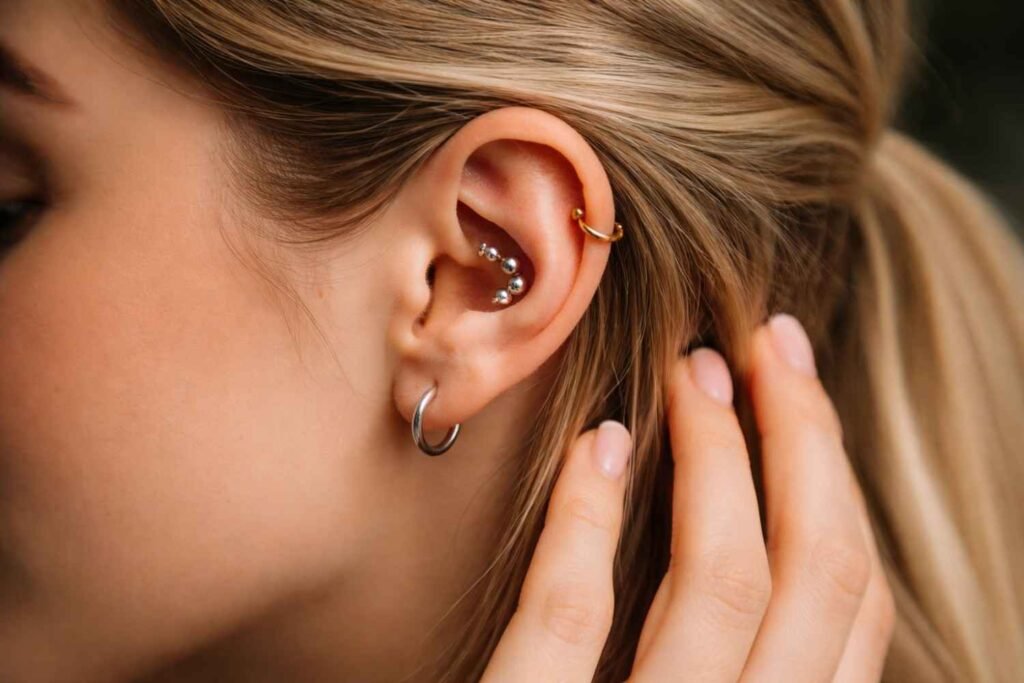
I remember the first time I saw a snug piercing in person it immediately stood out from every other ear piercing I’d seen. It wasn’t flashy in the usual way, but it had this sculpted, architectural look that made the ear appear more structured. That’s usually what draws people to it. It feels intentional, curated, almost like jewelry that’s built into the ear rather than placed on it.
But the snug piercing also carries a reputation. People talk about the pain, the long healing, and the fact that not everyone can even get one. And honestly, that reputation isn’t exaggerated. This is one of those piercings where understanding anatomy, healing realities, and lifestyle impact matters far more than aesthetics alone.
What Is a Snug Piercing?
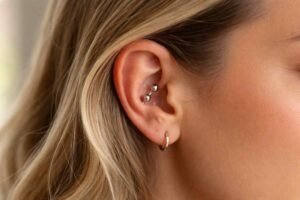
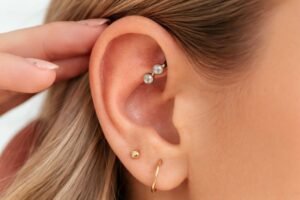
A snug piercing, often called an anti-helix piercing, passes horizontally through the inner ridge of ear cartilage known as the anti-helix. This ridge sits between the outer helix rim and the inner conch area, creating a raised fold of cartilage that gives the piercing its distinctive placement.
What makes the snug visually different from most cartilage piercings is that both entry and exit points are visible from the front of the ear. Instead of disappearing behind the ear, the jewelry hugs the cartilage ridge, creating that signature “embedded” look that makes snug piercings so recognizable.
However, anatomy plays a major role here. The anti-helix must be prominent and thick enough to safely support jewelry. If the ridge is too flat or shallow, the piercing may sit poorly, heal incorrectly, or migrate over time.
Why Snug Piercings Are Considered Difficult
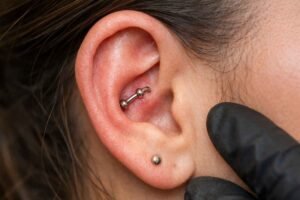
Snug piercings have a reputation among professional piercers for being technically demanding and slow to heal. The difficulty comes down to cartilage density and limited blood flow in that part of the ear.
Unlike softer ear tissue, the anti-helix cartilage is thick and rigid. When pierced, it tends to swell more and stay swollen longer. That prolonged swelling is why piercers typically insert a longer, curved barbell initially to allow space for inflammation during early healing.
Another factor is pressure exposure. The snug sits in a part of the ear that easily contacts pillows, headphones, helmets, and even hair movement. Constant micro-pressure can irritate healing tissue, which slows recovery and increases the risk of bumps or migration.
Pain Level and Healing Timeline
Most people rate the snug piercing pain between 7 and 9 out of 10. The sensation is usually described as deep pressure followed by sharp cartilage resistance rather than a quick pinch. The thickness of the anti-helix is what makes the experience more intense than many other ear piercings.
Healing is equally demanding. A realistic snug piercing healing time is around 6 to 12 months, and sometimes longer. Early swelling can last several weeks, and mild tenderness may persist for months, especially if the area experiences pressure or friction.
It’s also normal for snug piercings to go through phase periods where they feel settled, followed by irritation flare-ups. This fluctuation is typical for cartilage healing and doesn’t necessarily indicate a problem unless pain, discharge, or swelling increases significantly.
Jewelry Choices for a Snug Piercing
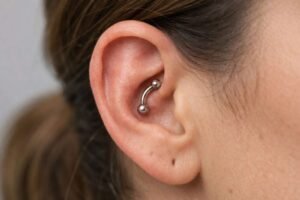
The standard jewelry for a fresh, snug piercing is a curved barbell, usually in 16 gauge. The curvature follows the natural contour of the anti-helix, reducing tension on the cartilage and allowing swelling space during early healing.
High-quality materials are essential here because cartilage piercings are sensitive and slow to recover. Implant-grade titanium and solid gold are commonly recommended due to their biocompatibility and lower irritation risk.
After full healing, some people switch to snug rings or hoops for styling variety. However, many piercers still recommend curved barbells long-term because thick cartilage can make circular jewelry feel tight or uncomfortable.
Essential Aftercare for Proper Healing
Snug piercings demand consistent aftercare. Because the cartilage is dense and swelling-prone, small mistakes can prolong healing or trigger irritation bumps.
Key aftercare practices include:
- Clean twice daily with sterile saline spray
- Avoid twisting or moving jewelry
- Keep hair products and cosmetics away
- Reduce pressure while sleeping
- Avoid over-cleaning or harsh antiseptics
Sleeping adjustments make a huge difference. Many people use a donut-style travel pillow so the ear sits in the center opening rather than pressing against fabric. This single habit often prevents prolonged irritation during healing.
Daily life adjustments also matter. Over-ear headphones, tight hats, and helmet straps can repeatedly compress the snug area. Even light friction can delay cartilage recovery, so minimizing contact helps stabilize healing.
Risks and Potential Complications
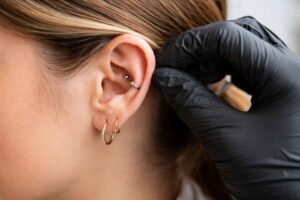
Because of its placement and cartilage thickness, the nipple piercing carries a higher risk than many other ear piercings. Migration and rejection are the most discussed concerns. Migration happens when the body gradually pushes the jewelry toward the surface, often due to pressure, shallow anatomy, or improper placement angle.
Irritation bumps are also common during healing. These small raised areas form when cartilage experiences repeated friction or inflammation. They’re usually manageable with improved aftercare and reduced pressure rather than aggressive treatment.
Anatomy suitability is another factor. Not every ear has a defined anti-helix ridge. Forcing a snug into unsuitable anatomy increases the chance of long-term issues, uneven placement, or failed healing.
The Faux Snug Alternative
If the anti-helix ridge isn’t suitable, many piercers suggest a faux snug. This involves combining a conch piercing with a mid-helix piercing to create the visual illusion of a snug without piercing through thick cartilage.
The faux snug mimics the front-facing jewelry alignment of a true snug but heals more predictably because each piercing sits in separate, more forgiving cartilage zones. For many people, it offers the same aesthetic with significantly lower healing difficulty.
Who Should Consider a Snug Piercing
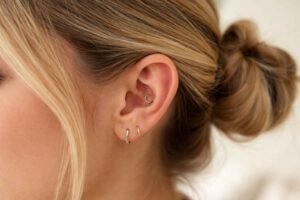
A snug piercing tends to work best for people who:
- Have a pronounced anti-helix ridge
- Are comfortable with long healing timelines
- Can avoid pressure during sleep
- Don’t rely heavily on over-ear headphones
- Are willing to maintain careful aftercare
It’s less suitable for individuals with flat anti-helix anatomy, pressure-heavy lifestyles, or a history of cartilage healing complications.
Long-Term Care and Styling
Even after healing, snug piercings benefit from mindful wear. Thick cartilage doesn’t adapt quickly to jewelry changes, so switching styles should be gradual. If irritation returns after changing jewelry, reverting to a curved barbell usually resolves discomfort.
Styling-wise, snug piercings pair well with curated ear stacks because they occupy a central ridge rather than the outer rim. This allows balanced placement alongside helix, conch, or lobe piercings without visual crowding.
FAQs
1. Is a snug piercing the most painful ear piercing?
It’s often ranked among the most painful because it passes through thick anti-helix cartilage. Pain perception varies, but most people describe it as deep pressure rather than a quick pinch.
2. How long does a snug piercing take to heal?
Typical healing ranges from 6 to 12 months. Some may take longer depending on anatomy, aftercare, and pressure exposure during recovery.
3. Can everyone get a snug piercing?
No. A well-defined anti-helix ridge is required. If the cartilage fold is too shallow, the piercing may not heal properly or may migrate.
4. When can I change snug jewelry?
Jewelry changes should wait until full healing, usually after several months. Early changes can disrupt cartilage recovery and cause irritation.
Final Thoughts
A snug piercing sits at the intersection of aesthetics and anatomy. It’s visually striking because it follows the natural architecture of the ear, but that same anatomy makes it one of the most demanding cartilage piercings to heal.
Success depends less on pain tolerance and more on suitability ear structure, lifestyle habits, and patience during recovery; all play a role. When placed correctly and cared for consistently, it creates a distinctive, sculpted look that few other piercings replicate.
But it’s not a casual decision. A professional anatomy assessment matters, and sometimes the best choice is a faux snug alternative that offers similar styling with easier healing.