
Tongue piercings have always sat in that space between edgy self-expression and serious commitment. I still remember the first time I saw frog eyes jewelry, two small beads sitting symmetrically on the tongue, almost playful at first glance. It looked minimal, balanced, and very different from the classic center tongue piercing most people know. That visual alone explains why curiosity around this piercing has grown so quickly.
But once you move past the aesthetic, frog eyes piercing becomes a more nuanced decision. It sits right at the intersection of anatomy, oral health, and body modification trends. Some piercers consider it acceptable when done correctly, while others approach it cautiously due to potential long-term effects. Understanding the placement, healing reality, and risks matters far more here than with many other oral piercings.
What Is a Frog Eyes Piercing?
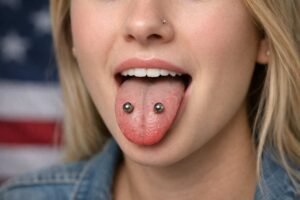
A frog eye piercing is a double tongue piercing where two separate vertical piercings are placed side-by-side toward the middle or tip of the tongue. When the tongue is extended, the two bead ends resemble a frog’s eyes, which is how the name originated.
Unlike what many people assume, this is not a single bar going through the tongue horizontally. True frog eyes involve two individual piercings positioned symmetrically on each side of the tongue’s midline. Each piercing typically uses its own straight barbell jewelry.
This distinction matters because placement determines both safety and healing behavior.
Frog Eyes vs Snake Eyes Piercing
These two are often confused, but they are structurally different and carry very different risk levels.
Frog eyes:
- Two separate vertical piercings
- Each side moves independently
- Jewelry: two straight barbells
Snake eyes:
- One horizontal bar through the tip
- Connects both tongue muscles
- Restricts natural movement
Professional piercers widely consider snake eyes unsafe because the single bar pins the two primary tongue muscles together. Proper frog eye piercing avoids that issue because each piercing sits independently within its own muscle section.
Placement and Procedure

Frog eyes placement sits toward the front half of the tongue, slightly back from the tip, but still visible when speaking or smiling. Symmetry is crucial. Even minor alignment differences become obvious once healed.
The procedure itself follows standard oral piercing practice. A piercer marks both sides of the tongue to ensure balance, then performs two vertical piercings separately. Extra-long straight barbells are used initially to accommodate swelling, which can be significant during the first few days.
Most people are surprised that the actual piercing moment is brief. The more noticeable part is the immediate swelling and pressure that follows.
Pain Level and Swelling Reality

Tongue tissue heals quickly compared to many body areas, but the initial reaction can feel intense. Pain is usually described as sharp but very short-lived during the piercing itself. The first three to five days afterward are when discomfort peaks.
Swelling can temporarily make speech feel awkward and eating slower. Some people notice their tongue feels almost twice its normal thickness during the first couple of days. This phase improves quickly once inflammation begins to settle.
Healing Timeline
Surface healing for frog eye piercing is relatively fast, but internal stabilization takes longer.
- Surface closure: about 4–8 weeks
- Internal tissue maturation: 4–6 months
- Jewelry downsizing: usually after swelling resolves
Because two piercings are healing simultaneously, consistent aftercare matters more than with a single nose piercing. Any irritation on one side can influence the other due to shared movement during speaking and eating.
Aftercare Essentials

Oral piercings live in a bacteria-rich environment, so hygiene consistency determines healing success.
- Rinse with alcohol-free mouthwash or saline after meals
- Brush gently around jewelry using a soft toothbrush
- Avoid alcohol and smoking during early healing
- Choose soft, cool foods initially
- Do not play with jewelry
Cold foods like yogurt, smoothies, and chilled soups help reduce swelling during the first week. Long starter barbells may feel awkward at first, but they prevent pressure complications during swelling.
Long-Term Lifestyle Impact
Many people focus only on healing, but daily function matters just as much. Frog eyes piercing interacts with activities that involve tongue movement, which is most of them.
Speech patterns may feel slightly different during early healing. Certain sounds that require tongue-tip precision can feel awkward at first. This usually improves once swelling resolves and shorter jewelry is installed.
Eating habits also adapt briefly. Foods that require heavy tongue manipulation, like chewy bread or sticky textures, can feel uncomfortable early on. Most wearers adjust naturally over time.
Dental awareness becomes a long-term habit. Being mindful of jewelry contact with teeth reduces the chance of enamel damage.
Jewelry Materials That Work Best

Material quality significantly affects oral piercing comfort and safety.
Implant-grade titanium is widely preferred because it is lightweight, nickel-free, and biocompatible. It minimizes allergic reactions and reduces irritation during healing.
High-quality gold, typically 14K or higher, is another safe long-term option. It offers durability with low reactivity when manufactured specifically for body jewelry.
Some wearers switch to biocompatible polymer jewelry later because it is softer than metal and less likely to chip teeth. This can be useful for people concerned about dental contact.
Who Should Avoid Frog Eyes Piercing

This piercing is not ideal for everyone. Certain oral characteristics increase risk.
People with thin tongues, uneven muscle structure, or prominent veins near the front of the tongue may not have suitable anatomy. A skilled piercer will assess this before proceeding.
Those prone to gum recession or enamel erosion should also consider alternatives. Even gentle jewelry contact can accelerate existing dental vulnerability.
Anyone unwilling to maintain strict oral hygiene during healing is also a poor candidate, since oral piercings demand consistent care.
Removal and Scarring
If the frog eye piercing is removed early in healing, the holes usually close quickly with minimal trace. After full healing, small scars or indentations may remain, though they are typically subtle.
Migration-related removal can leave more noticeable marks if tissue thinning occurred before jewelry exit. Early professional evaluation reduces that risk.
FAQs
1. Is frog eyes piercing safer than snake eyes?
Yes, when performed as two separate vertical piercings. Each side moves independently, avoiding the muscle restriction caused by a single horizontal bar.
2. How long does a frog eye piercing take to heal?
Surface healing usually takes 4–8 weeks, while deeper tissue stabilization can take up to six months.
3. Can a frog eye piercing damage teeth?
It can if jewelry repeatedly contacts teeth or gums. Proper placement, correct sizing, and mindful movement reduce this risk.
4. Do professional piercers recommend frog eyes piercing?
Opinions vary. Some perform it selectively with correct anatomy and placement, while others avoid it due to long-term movement and dental concerns.
Final Thoughts
Frog eyes piercing sits in a unique space within oral piercings, visually striking yet anatomically sensitive. When performed correctly as two independent vertical piercings, it avoids the major muscle-binding risks associated with snake eyes. Still, it demands more awareness than many piercings because the tongue is constantly active. Healing discipline, jewelry quality, and dental mindfulness shape the long-term outcome far more than the piercing moment itself.
For those with suitable anatomy and realistic expectations, frog eyes can heal well and remain comfortable. The key is choosing an experienced piercer and respecting the aftercare process fully.