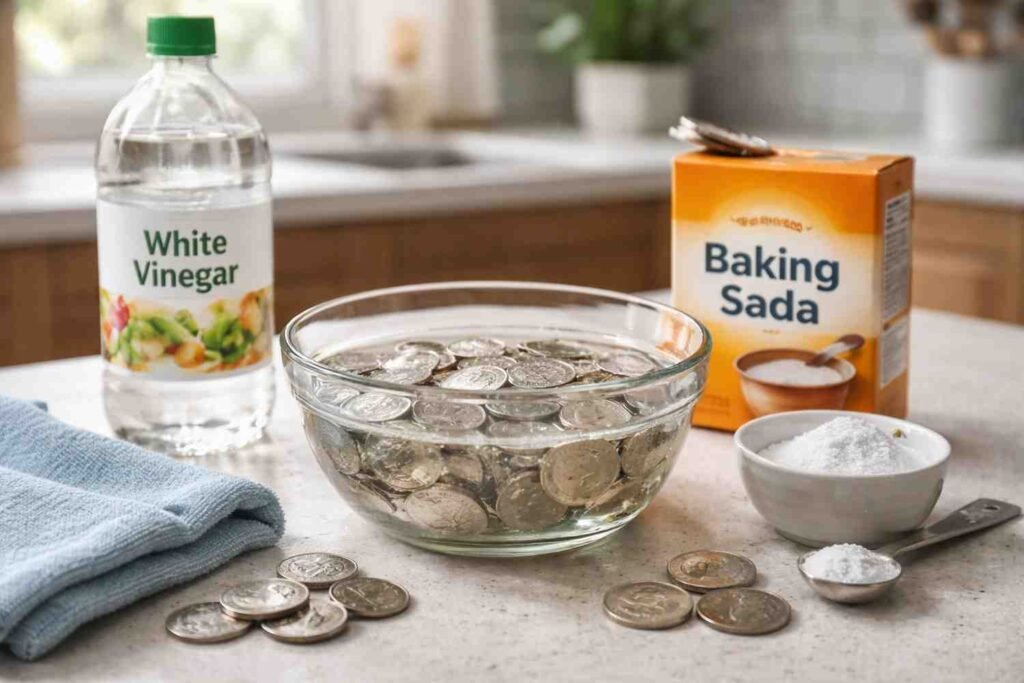
I still remember the first time I tried to clean old silver coins I’d found in a forgotten jar. They looked dull, almost grey, nothing like the bright metal I expected. A quick search suggested vinegar, baking soda, and a few minutes of soaking. It worked; the tarnish faded, and the shine returned. But later, I learned something collectors already know: cleaning can quietly erase value along with dirt. That realization changed how I approach silver coin care.
If you’re holding tarnished silver coins today, you’re probably balancing the same questions I had. Can vinegar safely restore shine? Will it damage the surface? Should every coin even be cleaned? The truth is simple but often overlooked: vinegar cleaning is effective for common silver coins meant for personal use or bullion storage, but risky for collectable pieces. Used correctly, it can brighten silver at home with basic supplies. Used carelessly, it can permanently alter the coin’s surface.
Why Silver Coins Tarnish Over Time
Silver doesn’t rust, but it does react with sulfur compounds in the air. This reaction forms silver sulfide, the dark film known as tarnish. Coins stored in humid environments, cardboard holders, or open containers often tarnish faster because sulfur and moisture remain trapped around the metal.
Natural skin oils also play a role. Even light handling leaves residues that accelerate discoloration. Over time, the surface dulls and loses reflectivity, especially on coins stored outside protective capsules.
Tarnish itself isn’t damage. In fact, on older coins, it becomes patina, a natural surface layer valued by collectors. Cleaning removes both tarnish and microscopic metal beneath it. That’s why understanding which coins are safe to clean matters before using vinegar.
When It’s Safe to Clean Silver Coins
Not every silver coin should be cleaned. Some should remain exactly as they are.
It’s generally safe to clean:
- Common circulation silver coins with no collectable premium
- Bullion coins are valued mainly for their metal content
- Heavily tarnished pieces intended for display or personal storage
It’s best not to clean:
- Rare or antique coins
- Proof or mint-condition coins
- Coins with visible lustre or toning patterns
- Any coin you may sell to collectors
Even gentle cleaning can reduce collector value dramatically by removing original surface texture and patina.
How Vinegar Cleans Silver Coins
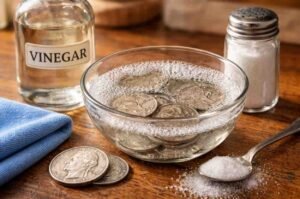
White vinegar contains acetic acid, a mild acid that reacts with silver sulfide. The reaction dissolves the tarnish, exposing brighter metal beneath. This is why coins often look instantly cleaner after soaking.
But acid doesn’t distinguish between tarnish and metal. Prolonged exposure slowly etches the surface. This can soften details, remove mint lustre, and leave a slightly matte appearance. That’s why timing and rinsing are critical in vinegar cleaning.
Used briefly and correctly, vinegar removes tarnish effectively. Left too long, it alters the coin permanently.
Step-By-Step: Cleaning Silver Coins With Vinegar
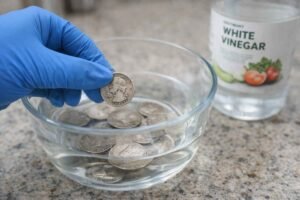
This method is suitable for non-collectible silver coins only.
Prepare the Cleaning Solution
In a bowl of lukewarm water, mix:
- ½ cup white vinegar
- 2 tablespoons baking soda
You’ll see light bubbling, a normal reaction. For stronger action, a teaspoon of salt can be added, though this increases surface reactivity and should be monitored closely.
Soak the Coins
Place coins in the solution so they are fully submerged and not touching each other.
- Light tarnish: 5–10 minutes
- Moderate tarnish: 10–20 minutes
- Heavy tarnish: up to 2 hours with frequent checks
Extended soaking increases the risk of surface etching, so inspection every 15–20 minutes helps prevent over-cleaning.
Gently Remove Residue (Optional)
If dirt remains, lightly rub the coin with fingertips under the solution. A very soft toothbrush may be used only for stubborn grime. Baking soda particles are mildly abrasive, so scrubbing pressure should remain minimal.
Rinse Thoroughly
Rinse each coin under distilled water to remove all acidic residue. Tap water can contain chlorine and minerals that leave spots or encourage future tarnish.
Dry Carefully
Pat dry with a lint-free cloth or allow to air dry. Avoid rubbing. Friction can create micro-scratches and dull the surface sheen.
A Safer Alternative: The Foil And Baking Soda Method
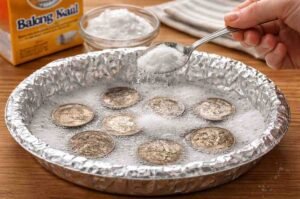
For those concerned about acid exposure, an electrochemical cleaning method removes tarnish without abrasion or direct acid contact.
Line a glass bowl with aluminium foil, shiny side up. Add boiling water and baking soda (about one tablespoon per cup of water). Place coins so they touch the foil. Within minutes, tarnish transfers from the silver to the aluminium through an electrochemical reaction.
This method preserves surface texture better than vinegar soaking and is often preferred for lightly tarnished silver intended for long-term storage.
Common Mistakes That Damage Silver Coins
Many cleaning problems come from small habits rather than the vinegar itself.
Leaving coins in the solution too long is the most common cause of dull surfaces. Acid exposure continues even after tarnish disappears. Another frequent mistake is scrubbing with cloths or brushes, which introduces hairline scratches visible under light. Rinsing with tap water can also leave mineral deposits that later discolour the metal.
Handling coins by their faces instead of edges transfers oils that accelerate future tarnish. Even after cleaning, storage in paper envelopes or humid containers can quickly reverse results.
How To Protect Coins After Cleaning
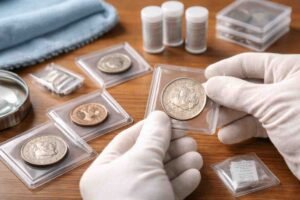
Cleaning is only part of coin care. Preventing new tarnish keeps coins bright longer.
Store coins in inert holders such as plastic capsules or archival sleeves. Keep them in low-humidity environments away from cardboard, paper, or rubber materials that release sulfur. Silica gel packs in storage containers help absorb moisture.
Handling should always be by the edges. Even clean skin transfers oils invisible at first but corrosive over time.
With proper storage, cleaned silver coins maintain their appearance far longer without repeated chemical exposure.
FAQs
1. Should all silver coins be cleaned with vinegar?
No. Vinegar cleaning is suitable only for common or bullion silver coins. Rare or collectable coins should remain uncleaned because cleaning removes patina and reduces value.
2. How long should silver coins soak in vinegar?
Light tarnish usually clears within 5–10 minutes. Heavier tarnish may require longer soaking, but coins should be checked frequently to avoid surface etching.
3. Does vinegar damage silver coins permanently?
Extended or repeated vinegar exposure can remove microscopic metal layers, dulling luster, and altering surface texture. Short, controlled cleaning minimises this risk.
4. Is baking soda safe for silver coins?
Baking soda helps neutralize acid and lift tarnish, but it is mildly abrasive. Gentle contact only is recommended to prevent micro-scratches on the coin surface.
Final Thoughts
Cleaning silver coins with vinegar sits in a grey area between restoration and alteration. For everyday silver pieces, it can revive brightness quickly using items already at home. The chemistry is straightforward, the results are visible within minutes, and the process is accessible to anyone willing to monitor timing carefully. But the same reaction that removes tarnish also reshapes the coin at a microscopic level. That’s why collectors avoid cleaning entirely once the original surface is gone; it never returns.
If a coin holds personal or historical value, preservation outweighs shine. When appearance matters more than collectable condition, careful vinegar cleaning remains a practical option.