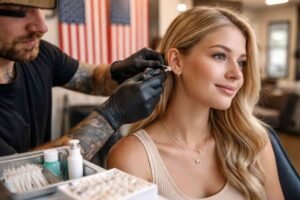
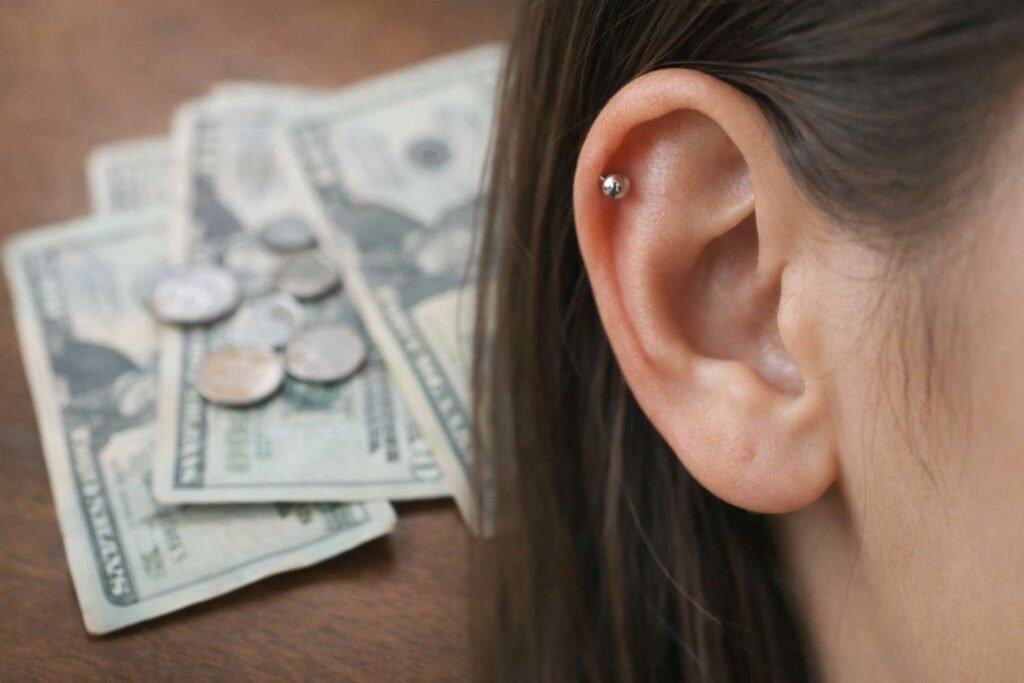
Getting my first cartilage piercing felt very different from a standard lobe piercing. The environment was calmer, more clinical, and honestly, more serious. The consultation alone took longer than the actual piercing. That was also when I realized cartilage piercings are priced differently, not just because of placement, but because of skill, jewelry quality, and safety standards involved.
Most people assume ear piercings are inexpensive across the board. That’s true for lobes, but cartilage is a different category. The tissue is thicker, healing is slower, and the risk of complications is higher if done poorly. That’s why professional cartilage piercing costs reflect both expertise and medical-grade materials, not just the act of piercing.
Average Cartilage Piercing Cost
A typical cartilage piercing usually costs between $40 and $100 when you include both the piercing service and basic starter jewelry. This range applies to common placements like helix, tragus, and flat piercings done with standard implant-grade jewelry.
However, this number is only the baseline. Once you step into higher-end studios or upgrade jewelry, the total can increase quickly. Many people also don’t realize that the piercing fee and jewelry are often charged separately, which changes the final price perception.
Cost Breakdown: What You Actually Pay For
Understanding how studios structure pricing makes cartilage piercing costs much clearer. Most reputable piercing studios separate the procedure fee from the jewelry itself.
Typical breakdown:
- Service fee: $30–$60
- Starter jewelry: $15–$50
- Aftercare saline: $10–$20
So even a simple cartilage piercing realistically lands around $55–$130 total, depending on jewelry choice and studio level.
Higher-end jewelry changes the picture entirely. Solid gold or designer pieces can push the total into the $150–$350+ range, even for a single piercing.
Cartilage Piercing Cost by Placement
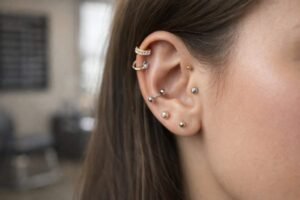
Not all cartilage piercings are priced the same. Some placements are technically harder, require more precision, or use specialized jewelry shapes. That directly affects cost.
Typical ranges by type:
- Helix / Flat: $40–$95
- Tragus / Conch: $60–$115
- Daith / Rook: $65–$125
- Industrial: $70–$130
- Snug / Anti-tragus: $60–$120
Industrial piercings often cost more because they involve two perforations and a longer barbell. Similarly, snug and rook piercings demand advanced placement accuracy, which increases professional fees.
Why Cartilage Piercings Cost More Than Lobes
Cartilage piercings are technically more demanding than lobe piercings. The tissue is denser and less vascular, meaning it heals more slowly and reacts more strongly to trauma. A poorly placed cartilage piercing can lead to migration, bumps, or permanent deformation.
Professional studios price cartilage work higher because it involves:
- Precise anatomical placement
- Sterile single-use needles
- Implant-grade jewelry materials
- Advanced aftercare guidance
- Longer consultation time
This is also why reputable piercers avoid piercing guns for cartilage entirely. Hollow needles create a clean channel, while guns use blunt force, which can damage cartilage structure.
Jewelry Material and Its Impact on Price
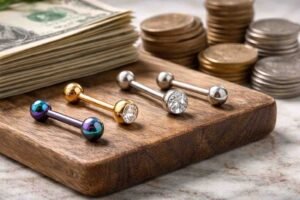
Jewelry is one of the biggest variables in cartilage piercing cost. Starter jewelry is usually implant-grade titanium or surgical steel, both considered safe for fresh piercings.
But upgrades are common, especially for visible placements like helix or conch. Solid gold, gemstone ends, or designer pieces significantly raise the total cost. Many people choose upgrades immediately because cartilage jewelry stays in place for months during healing.
The long-term reality is that cartilage piercings often become permanent aesthetic pieces, not temporary jewelry. That mindset naturally shifts people toward higher-quality options.
Studio Experience and Certification
Another major price driver is piercer expertise. Studios with highly trained piercers, strict sterilization protocols, and professional certifications typically charge more, and for good reason.
Piercers affiliated with professional industry organizations follow medical-grade sterilization standards, safe jewelry guidelines, and anatomical placement training. This reduces complication risk, which is especially important for cartilage piercings.
Experience also matters for comfort and outcome. A skilled piercer can position jewelry to match ear anatomy, symmetry, and future stacking plans, something cheaper studios rarely consider.
Location and Studio Environment
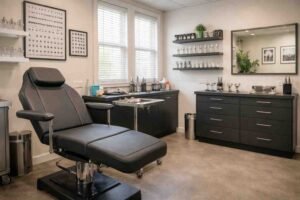
Piercing costs often vary by studio environment and local operating costs. High-end studios with private rooms, autoclave sterilization equipment, and consultation-based service models usually charge more than walk-in piercing shops.
This difference reflects overhead, training, and safety protocols rather than just branding. Clean-room setups, sterile fields, and single-use tools all add operational cost, but they also dramatically improve safety.
Hidden Costs People Forget
Many first-time cartilage clients focus only on the piercing fee and overlook additional expenses that commonly occur.
Common extras include:
- Aftercare saline refills
- Downsizing jewelry after swelling
- Upgrading ends during healing
- Follow-up checks or adjustments
Downsizing is especially common. Initial jewelry is intentionally longer to allow swelling. After healing begins, shorter posts improve comfort and appearance, which adds another jewelry purchase.
Tipping and Etiquette
Professional piercing services typically include tipping, similar to tattooing or hair services. Standard etiquette is about 15%–25% of the service fee.
This is often overlooked when budgeting. For example, a $50 piercing service plus tip and jewelry can easily become an $85–$120 total appointment.
Safety vs Cheap Piercings
Lower-priced cartilage piercings often come with trade-offs. The biggest warning sign is cartilage piercing with a gun, commonly seen in mall kiosks or accessory shops. These devices create blunt trauma rather than a clean needle channel, increasing complication risk.
Professional cartilage piercing always uses sterile, single-use hollow needles. The difference in technique directly affects healing, pain, and long-term outcome.
Choosing a lower price point may seem appealing initially, but complications or corrective jewelry changes often cost more later. Many experienced piercers end up fixing poorly placed cartilage piercings from cheaper venues.
Is a Cartilage Piercing Worth the Cost?
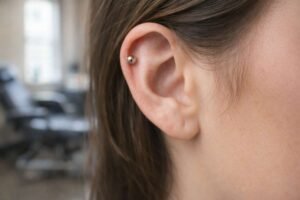
Cartilage piercings sit at the intersection of body art and anatomy. They require more precision than lobes and remain visible for years, often becoming part of someone’s personal style identity. That’s why pricing reflects both skill and permanence.
From experience, the cost difference between a budget cartilage piercing and a professional one becomes obvious during healing. Comfort, placement accuracy, and jewelry quality all feel noticeably different. What seems like a small upfront saving can become a long-term regret if placement or healing goes wrong.
A well-done cartilage piercing, on the other hand, heals predictably, sits correctly, and rarely needs correction. In that sense, the cost is less about the procedure and more about the outcome you live with afterward.
Final Thoughts
Cartilage piercing costs are shaped by more than just the act of piercing. Placement complexity, jewelry material, studio standards, and piercer expertise all contribute to the final price. While the average range sits between $40 and $100 for basic setups, realistic totals often land higher once jewelry quality, aftercare, and tipping are included. Understanding this full picture helps set accurate expectations before booking.
In the end, cartilage piercing is one of those areas where quality truly matters. Paying for skill, sterile technique, and safe jewelry almost always results in better healing and long-term satisfaction.
FAQs
1. How much does a cartilage piercing usually cost?
Most cartilage piercings cost between $40 and $10,0, including basic jewelry. Higher-end jewelry or complex placements can increase the total to $150 or more.
2. Why are cartilage piercings more expensive than lobe piercings?
Cartilage tissue is thicker and riskier to pierce. It requires sterile needles, precise placement, and medical-grade jewelry, which increases professional service cost.
3. Does cartilage piercing price include jewelry?
Many studios charge separately for service and jewelry. Basic titanium jewelry usually adds $15–$50, while gold or designer pieces can add $100+.
4. Do I need to tip for a cartilage piercing?
Yes. Tipping 15%–25% of the service fee is standard etiquette for professional piercing services.