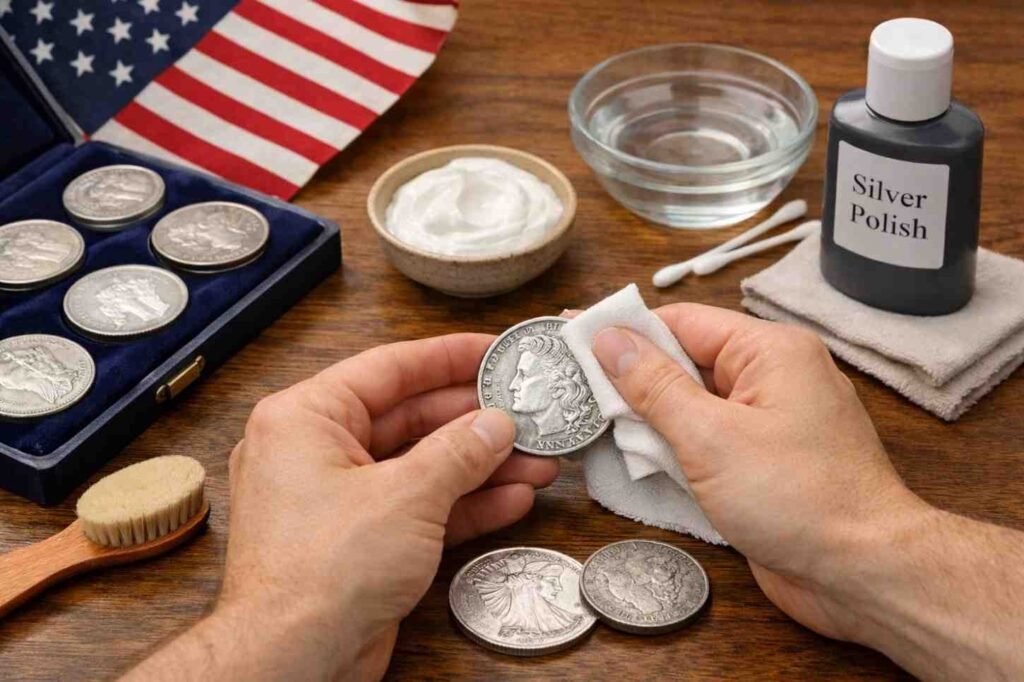
Silver coins carry a quiet kind of history. Even when they’re common bullion pieces, they tend to pick up fingerprints, dull patches, or that grayish tarnish that makes people instinctively want to polish them back to shine. I’ve seen many collectors regret rushing into cleaning, especially when a coin looked “better” but silently lost surface quality. That tension between appearance and preservation is what makes this topic tricky.
The truth is, polishing silver coins safely isn’t really about making them bright. It’s about removing dirt or reactive tarnish without altering the metal surface itself. That distinction matters more than most people realize. A coin can look clean yet still be damaged at a microscopic level, which is why careful method and restraint matter more than effort.
When You Should And Should Not Polish Silver Coins
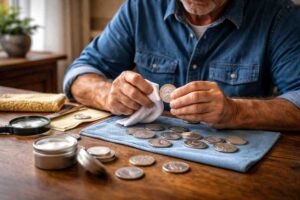
Before any cleaning method, the most important step is deciding whether the coin should be polished at all. Silver coins fall into three broad categories, and each behaves very differently during cleaning.
Collector or rare coins should rarely be cleaned at home. Their natural toning, known as patina, forms over time and is part of their value. Removing it can permanently reduce desirability and grading potential. Even gentle polishing can leave hairline marks visible under magnification.
Proof coins are even more sensitive. Their mirror-like surfaces show friction immediately. What looks like a light wipe often leaves permanent streaking that cannot be reversed. These coins are best left untouched except by professional conservation.
Bullion coins, on the other hand, are usually safe to clean if appearance bothers you. Their worth comes mainly from metal content rather than surface condition. Even then, the goal should be dirt or tarnish removal, not polishing to shine.
What Actually Happens When Silver Coins Tarnish
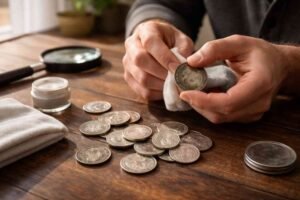
Silver tarnish isn’t dirt sitting on top. It’s a chemical reaction between silver and sulfur compounds in air or moisture. That reaction forms silver sulfide, the dark layer people see as toning. Because it’s bonded to the metal surface, aggressive polishing removes actual silver along with tarnish.
That’s why abrasive methods are risky. Even substances that feel mild, like baking soda paste or toothpaste, contain microscopic particles that scratch the surface. Under light, those scratches scatter reflections and dull the coin permanently. Once that happens, no polishing restores the original finish.
Safe cleaning works differently. Instead of scraping tarnish off, it either loosens contaminants or reverses the chemical reaction without friction. That’s the principle behind the safest methods.
Safest Method: Mild Soap And Distilled Water
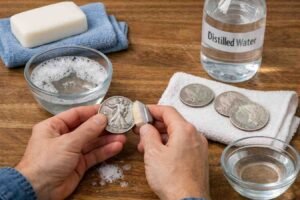
For most bullion coins with light dirt, this approach is enough and carries the lowest risk. It removes oils, dust, and surface residue without altering the metal.
Steps:
- Mix a few drops of mild dish soap into warm distilled water
- Soak the coin for about 5–10 minutes
- Lightly move fingers across the surface only if needed
- Rinse in fresh distilled water
- Pat dry with a microfiber cloth (never rub)
Distilled water matters because tap water contains minerals and chlorine that can leave spots or trigger reactions on silver. Gentle soaking also matters because rubbing even softly creates friction lines over time.
Tarnish Removal Without Scrubbing: Foil And Baking Soda
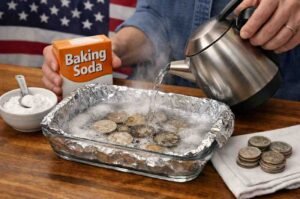
When coins have heavier gray or black tarnish, the aluminum foil method works by chemical transfer rather than abrasion. The sulfur, causing tarnish, moves from the silver tothe aluminum, restoring brightness without scraping the surface.
Steps:
- Line a bowl with aluminum foil, shiny side up
- Place the coin on the foil
- Sprinkle baking soda lightly over it
- Pour hot distilled water (not boiling)
- Wait about 2–5 minutes
- Rinse thoroughly and pat dry
You’ll often notice tarnish marks appearing on the foil instead of the coin. That’s the reaction doing the work. Timing matters; long exposure isn’t better and can dull surfaces slightly.
Slow But Gentle: Olive Oil Soak
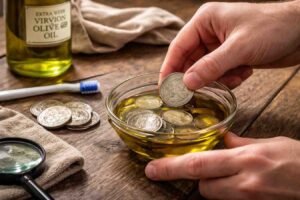
For coins with hardened deposits or crusted residue, olive oil works by softening contaminants gradually. It’s extremely gentle but slow, sometimes taking weeks. This method is useful when you want minimal intervention.
Place coins fully submerged in olive oil inside a sealed container. Check periodically. Once debris loosens, rinse with mild soap and distilled water, then dry carefully. The process avoids mechanical friction entirely.
Cleaning Mistakes That Permanently Damage Coins
Most coin damage comes not from extreme methods but from everyday cleaning habits that feel harmless. These mistakes are surprisingly common:
- Toothpaste or baking soda paste
- Lemon juice, vinegar, or acidic cleaners
- Paper towel wiping
- Steel wool or brushes
- Vigorous rubbing
- Tap water rinsing
Abrasives create microscopic scratches. Acids etch metal surfaces. Paper fibers leave hairlines. Tap water leaves mineral spots. None of these effects can be undone once present.
Handling And Drying Matter More Than Polishing
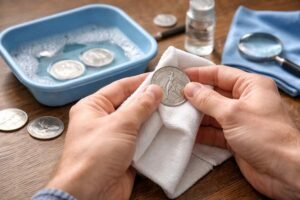
Even correctly cleaned coins can develop new tarnish quickly if handled poorly. Skin oils contain salts and acids that accelerate reactions on silver. That’s why fingerprints often appear as dark patches later.
Always hold coins by their edges. Cotton or nitrile gloves add protection when handling frequently. After cleaning, drying should always be blotting, never wiping. Air drying alone can leave water spots, especially if minerals remain.
Storage also determines how often cleaning becomes necessary. Airtight coin capsules or acid-free holders slow oxidation significantly. Adding silica gel helps control moisture, which is one of the main drivers of tarnish formation.
How Often Should Silver Coins Be Cleaned
For bullion coins, cleaning should be occasional rather than routine. Silver naturally tones over time, and repeated polishing, even gentle, gradually alters the surface. Many experienced collectors prefer light toning over frequent cleaning because it signals natural aging rather than interference.
If coins are stored well, cleaning may only be needed when visible dirt or uneven tarnish appears. Brightness should never be the goal. Preservation always outweighs shine.
FAQs
1. Should silver coins be polished to look shiny?
No. Polishing for shine removes surface metal and can permanently alter the coin’s finish. Cleaning should focus only on removing contaminants or reactive tarnish without abrasion.
2. Can cleaning reduce a silver coin’s value?
Yes. Removing natural patina or creating microscopic scratches can significantly reduce collector value, especially for rare or proof coins.
3. Is baking soda safe for cleaning silver coins?
Dry baking soda in the foil method is safe because it drives a chemical reaction. Baking soda paste or scrubbing is unsafe due to abrasiveness.
4. Why is distilled water recommended for coin cleaning?
Distilled water lacks minerals and chlorine found in tap water, preventing spotting, residue, and chemical reactions on silver surfaces.
Final Thoughts
Cleaning silver coins safely is less about technique and more about restraint. The instinct to restore shine often conflicts with how silver actually ages and reacts. Tarnish is not always damage; sometimes it’s simply the metal stabilizing over time. Understanding when to leave a coin alone is just as important as knowing how to clean it. When cleaning is appropriate, the gentlest methods always outperform aggressive polishing, both visually and structurally.
In the long run, preservation beats brightness. A well-handled, lightly toned coin usually retains more character and often more value than one polished too often.