
I remember sitting in the piercing chair, convinced I was about to experience something dramatic. Nose piercings have this reputation as more serious than an earlobe, less intense than anything else, and that uncertainty makes people imagine the worst. The truth is far less dramatic. The anticipation almost always feels bigger than the actual sensation.
Most people who get a nose piercing walk away surprised by how fast it happens. The pain isn’t nonexistent, but it’s brief, sharp, and over before your brain fully registers it. Understanding what the pain actually feels like and how it changes by piercing type makes the whole experience much less intimidating.
What a Nose Piercing Actually Feels Like

A nose piercing is best described as a quick, sharp pinch followed by a split-second sting. On a typical pain scale, most people rate it between 3 and 5 out of 10. It’s more intense than an earlobe piercing because it passes through thicker cartilage, but the puncture itself lasts less than a second.
The sensation often surprises people because it’s so fast. There’s pressure, then a sudden “pop,” and it’s done. Many describe it similarly to an eyebrow wax pull or a quick, uncomfortable injection, but very tolerable.
Another common reaction is reflex tears. Your eyes may water immediately, even if the pain feels mild. This isn’t emotional; it’s simply how facial nerves respond when the nose area is stimulated.
Pain Levels by Nose Piercing Type
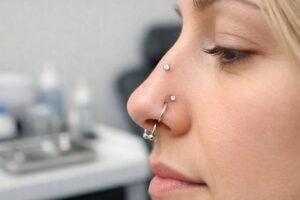
Not all nose piercings feel the same. The exact location changes both sensation and healing tenderness.
Nostril Piercing (3–5/10)
This is the most common and generally the most manageable. The needle passes through cartilage, creating a quick stinging pinch. Pain peaks instantly and fades within seconds. Most people describe the after-sensation as mild warmth or tingling rather than ongoing pain.
Septum Piercing (4–6/10)
Septum pain varies more than any other nose piercing. When placed correctly through the thin “sweet spot” between cartilage, the sensation feels like a strong pinch with pressure, sometimes compared to the feeling right before a sneeze. If cartilage is hit instead, pain increases sharply and becomes more intense.
High Nostril Piercing (5–7/10)
Higher placements pass through thicker cartilage with more nerve endings. That extra density creates more resistance during the puncture and usually more swelling afterward. People often describe this as deeper, more aching pain compared to the quick sting of a standard nostril piercing.
Bridge Piercing (3–5/10)
The bridge sits across the surface skin rather than the cartilage. Because no cartilage is penetrated, the sensation is more pressure than sharpness. Many people expect this piercing to hurt more than it does.
What Happens During the Piercing

The procedure itself is extremely quick. After marking placement and cleaning the area, the piercer inserts a sterile hollow needle. The puncture takes less than a second, followed immediately by jewelry insertion.
Several reactions are completely normal:
- Eyes watering instantly
- Brief metallic taste or nerve sensation
- Minor bleeding
- Urge to sneeze
- Dull throbbing for a few minutes
Most discomfort fades within minutes. The lingering sensation usually shifts from sharp pain to mild soreness or sensitivity.
The Pain After the Piercing
The initial puncture is not the part people notice most during healing. The tenderness that follows is more noticeable day-to-day.
For the first few days, the area may feel:
- tender to touch
- slightly swollen
- warm
- sensitive when smiling or moving the nose
Accidental bumps are what hurt most. Catching jewelry on clothing or towels can create a sudden, sharp pain, even after the piercing itself felt easy.
Cartilage also heals slowly. While the piercing may stop hurting quickly, sensitivity can last several weeks. This isn’t active pain, more like awareness that the area is healing.
What Makes a Nose Piercing Hurt More or Less

Pain varies significantly from person to person. Several factors influence how intense it feels.
Pain tends to feel stronger when:
- You’re anxious or tense
- Cartilage is thicker
- Placement is higher
- Piercing angle is difficult
- Jewelry is forced rather than inserted smoothly
Pain tends to feel milder when:
- You’re relaxed and breathing steadily
- The piercer hits the correct anatomical spot
- Tissue is pierced cleanly with a hollow needle
- Jewelry fits properly
The skill of the piercer matters more than most people realize. A precise, confident puncture is faster and less traumatic to tissue.
How Long Does the Pain Lasts
The actual piercing pain: seconds
Sharp sting sensation: 1–3 minutes
Tenderness: 3–7 days
Sensitivity to bumps: several weeks
By week two, most people feel little to no daily discomfort unless the piercing is touched or moved. Full healing takes longer, but active pain does not last that entire time.
Ways to Minimize Nose Piercing Pain

A few simple choices significantly reduce both nose piercing pain and healing discomfort.
- Choose a professional piercer using sterile hollow needles
- Avoid piercing guns, especially for cartilage
- Eat beforehand to stabilize blood sugar
- Avoid caffeine and alcohol before the appointment
- Choose implant-grade titanium or 14k gold jewelry
- Sleep carefully to avoid pressure on the nose
Good jewelry and proper technique reduce tissue trauma, which directly lowers both pain and swelling.
Is Nose Piercing Pain Worth Worrying About?

Most people expect a dramatic experience and instead get a quick sting that’s over almost immediately. The fear usually comes from imagining prolonged pain, but nose piercings simply don’t work that way.
Even people with low pain tolerance typically handle nostril piercings easily. The intensity is real, but the duration is so short that it rarely feels overwhelming.
The more accurate expectation is this: a brief, sharp pinch, watery eyes, a few days of tenderness, and then normal life resumes.
FAQs
1. Does a nose piercing hurt more than an ear piercing?
Yes, slightly. Nose cartilage is thicker than earlobe tissue, so the sensation feels sharper. However, the pain duration is still only seconds.
2. How painful is a nostril piercing on a scale?
Most people rate nostril piercings between 3 and 5 out of 10. It’s noticeable but very tolerable.
3. Why do eyes water during a nose piercing?
Facial nerves connected to the tear ducts are stimulated during the puncture. It’s a reflex, not a reaction to pain intensity.
4. Which nose piercing hurts the most?
High nostril piercings usually feel the most intense because they pass through thicker cartilage with more nerve endings.
Final Thoughts
Nose piercing pain sounds intimidating until you understand its true nature. The sensation is sharp but extremely brief, and for most people it lands firmly in the moderate range rather than severe. What matters more than pain tolerance is placement accuracy, piercer skill, and proper jewelry. When those factors align, the experience feels controlled, quick, and surprisingly manageable.
For most people, the anticipation is the hardest part, not the piercing itself.