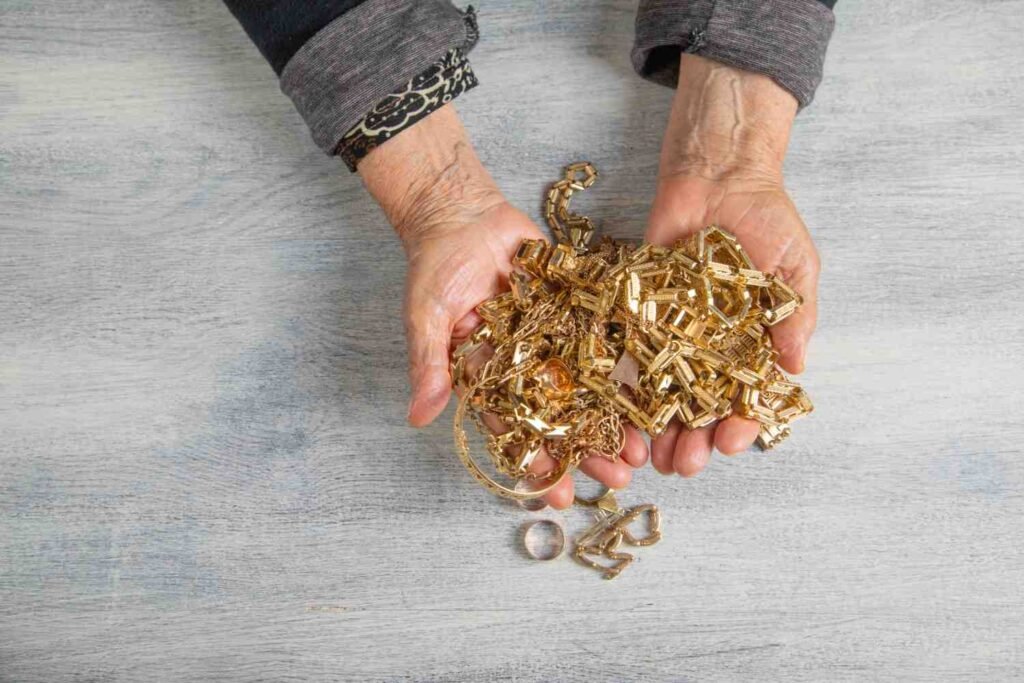
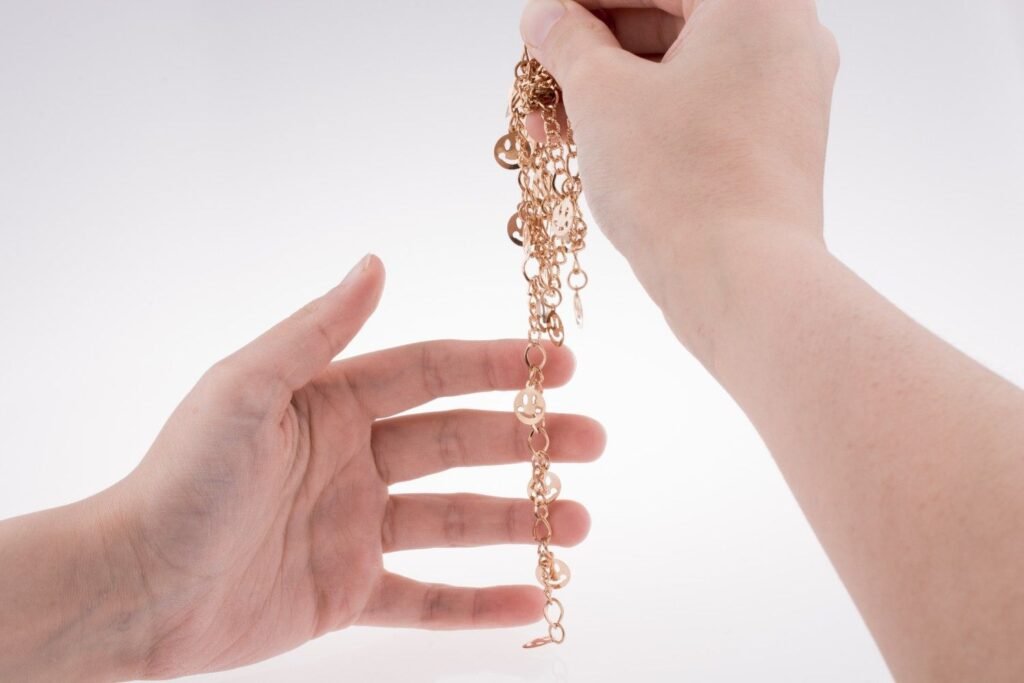
Necklaces are gorgeous, but let’s be real — nothing kills the vibe faster than a tangled chain. One minute you’re reaching for your favorite piece, the next you’re staring at a knot that looks like it’s plotting against you.
But don’t panic! Untangling doesn’t have to mean breaking, bending, or giving up. With the right tricks, you can rescue even the most stubborn knot and bring your jewelry back to life.
In this guide, I’ll show you step-by-step hacks to untangle your necklace safely, plus clever tips to prevent future tangles. Ready to reclaim your sparkle? Let’s dive in.
Why Do Necklaces Tangle in the First Place?

Before jumping into the solution, let’s explore the causes of those frustrating tangles. Most necklaces tangle when stored improperly or when chains get caught on each other. The more delicate the chain, the higher the chance of it twisting.
So, before you start untangling, it’s important to understand the cause and how to prevent it from happening again.
Essential Tools to Untangle Your Necklace Safely
The right tools can make all the difference when it comes to how to untangle a necklace without damaging it. Here’s what you’ll need:
- Flat, Hard Surface: Always start on a flat surface like a table or countertop, with a soft cloth underneath to protect your necklace from scratches.
- Two Fine-Pointed Tools: Fine sewing needles, safety pins, or toothpicks work best for precision. These tools help you carefully tease apart knots without pulling too hard.
- Lubricant: A small drop of baby oil or olive oil can reduce friction. Alternatively, use a small amount of baby powder for a dry solution that makes the links easier to move.
- Good Lighting: Make sure your workspace is well-lit, using a desk lamp or overhead light to clearly see the individual links and knots.
Step-by-Step Guide to Untangling a Necklace Without Damaging It
1. Prepare Your Workspace
Lay your necklace flat on your work surface, unclasp it, and remove any pendants. This helps prevent the necklace from looping back onto itself as you work. If you have a tangled pendant, take it off and focus on the chain first.
2. Loosen the Knot Gently
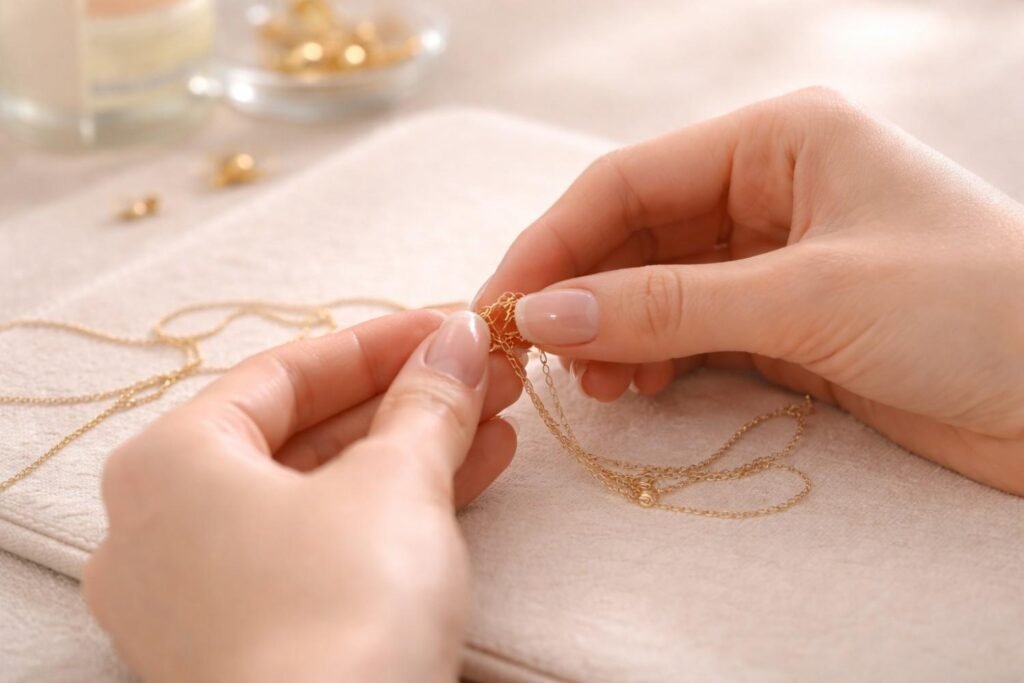
Start by gently massaging the knot with your fingers. This helps the links loosen without forcing them apart. This step is key for preventing damage—avoid pulling on the chain or clasp.
3. Apply Lubricant
For tough knots, apply a small amount of baby oil or olive oil using a cotton swab. Alternatively, sprinkle some baby powder directly onto the knot. This will make it easier for the links to slide apart.
4. Use Needles to Tease the Knot
Insert the tips of two fine-pointed tools (like sewing needles) into the center of the knot. Gently wiggle the tools in opposite directions or in small circles to loosen the knot from the inside out. Be patient and avoid rushing, as applying too much force can break the chain.
5. Separate the Strands Carefully
Once the knot starts to open up, use your fingers or tweezers to carefully pull the chain through the loops. Take your time here—forcing it could lead to a snapped chain or bent links.
6. Clean the Necklace
After untangling, soak the necklace in warm, soapy water to remove any residual lubricant or powder. Rinse it thoroughly and dry it with a soft, lint-free cloth to prevent any watermarks or residue.
Untangling Different Types of Necklaces Without Damaging Them
Each type of necklace has its own challenges when it comes to untangling. Some chains are more delicate, while others, like beaded or multi-strand necklaces, require a little extra care. Here’s how to approach untangling various types of necklaces to avoid damage:
1. Chain Necklace
Challenges: Chain necklaces, especially fine ones, tend to knot easily due to their thin links.
Method:
- Use fine needles to gently work through the knot, being cautious not to pull on the delicate links.
- If the chain is particularly fine, baby oil can be helpful in reducing friction as you carefully untangle the knot.
- After untangling, soak the chain in soapy water to clean off any residue.
2. Beaded Necklace
Challenges: Beaded necklaces are tricky because the beads can get caught in the knots, making it harder to free the chain.
Method:
- Lay the necklace flat and gently untangle the beads by working from the outer edges inwards.
- Use a toothpick or safety pin to carefully separate beads that are caught in the knot.
- Be patient, as pulling on the beads can break the thread or cause beads to fall off.
3. Delicate Necklace
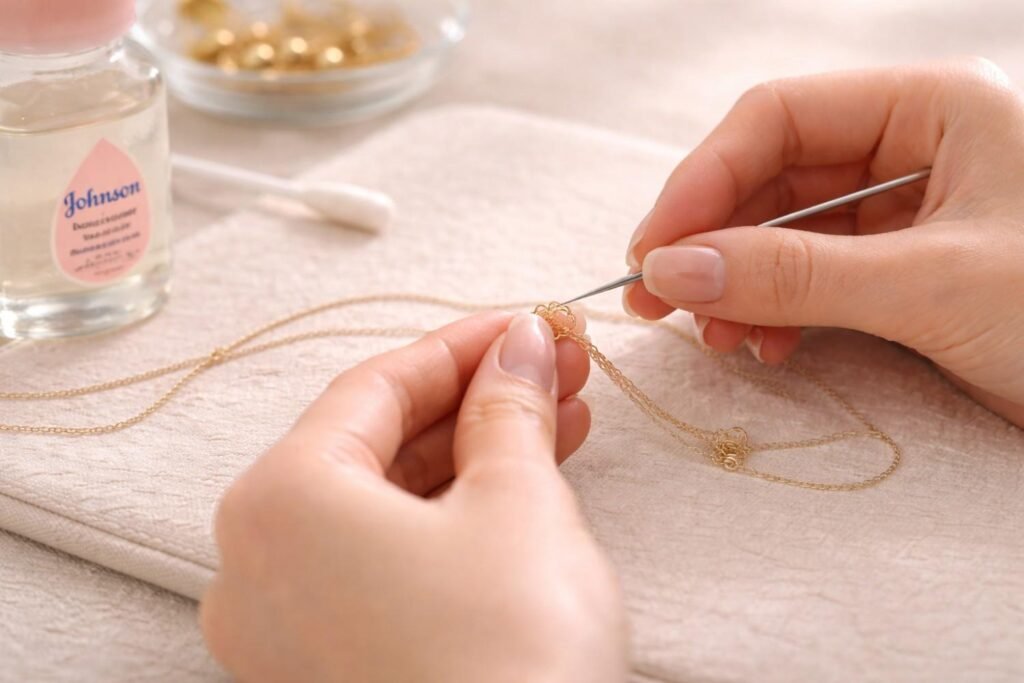
Challenges: Delicate necklaces, like those made of thin gold or silver, require the most care to avoid snapping.
Method:
- Apply baby oil or petroleum jelly to loosen the knot gently.
- Work slowly with fine-pointed needles to avoid putting too much pressure on the delicate links.
- Patience is key—take your time and work carefully to avoid damaging the necklace.
4. Pendant Necklace
Challenges: Pendants can get caught in knots, and their weight might make untangling tricky.
Method:
- If the pendant is removable, take it off to focus on the chain first.
- Use the same method as a chain necklace, but be extra careful when pulling the pendant through the knot.
- After untangling, clean the pendant separately to avoid getting any lubricant on it, especially if it’s made of a delicate material like pearl or gemstone.
5. Multi-Strand Necklace
Challenges: Multi-strand necklaces can get tangled in multiple places at once, making them harder to manage.
Method:
- Separate each strand and work on them individually. Gently loosen each knot with a needle or safety pin.
- You may need to apply a bit more lubricant (baby oil or petroleum jelly) to help the strands slide apart.
- Once untangled, carefully lay each strand flat and check for any areas that might need additional cleaning.
6. Pearl Necklace
Challenges: Pearl necklaces are usually strung together with silk or nylon thread, which is prone to damage when pulled too tightly.
Method:
- Avoid pulling too hard on the thread as this can cause it to snap.
- Use a needle or toothpick to gently tease apart the knot without pulling on the pearls themselves.
- For any knots that seem too tight, seek professional help as pearls can be expensive to repair if damaged.
How to Prevent Future Tangles in Different Types of Necklaces
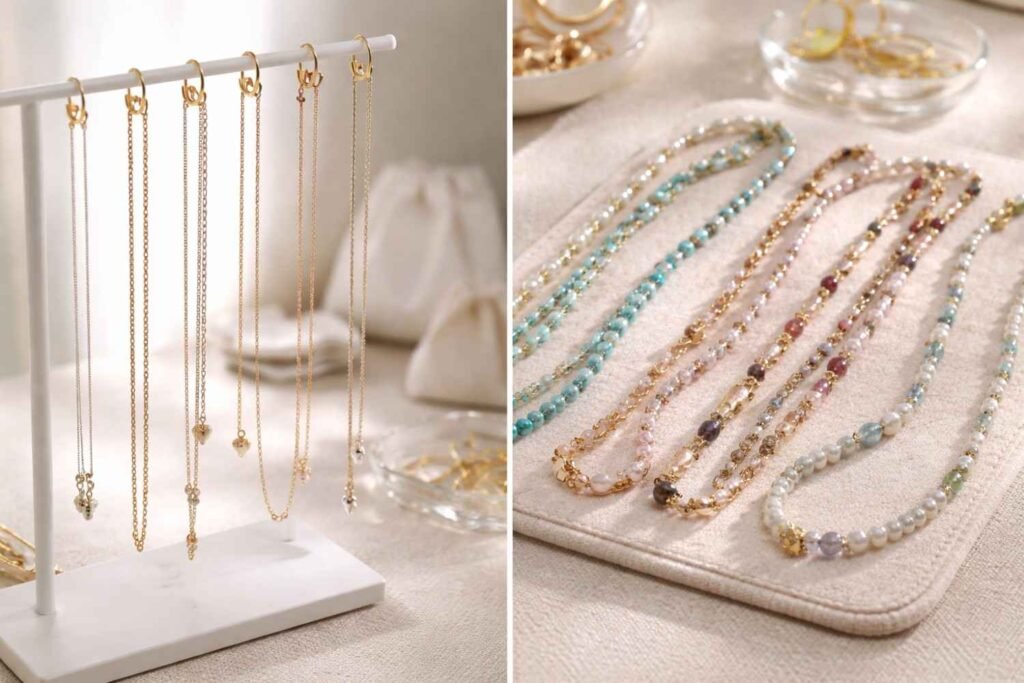
To keep your necklaces in good shape and prevent future tangles, here are a few tips for each type:
- Chain Necklaces: Store in individual pouches or use a necklace tree with hooks to keep them from getting caught with other pieces.
- Beaded Necklaces: Use a bead mat to store them safely and prevent the beads from shifting or breaking.
- Delicate Necklaces: Always fasten the clasp before storing and avoid coiling them up too tightly in drawers.
- Pendant Necklaces: Keep pendants in a jewelry box with dividers to prevent tangling.
- Multi-Strand Necklaces: Use a clothesline-style jewelry holder to hang each strand separately.
- Pearl Necklaces: Store pearls in a soft pouch and never place them next to abrasive materials that could scratch their surface.
Frequently Asked questions (FAQs)
1. Can I use water to untangle my necklace?
Using water alone isn’t ideal, as it can weaken certain chains, especially gold or silver. Stick with baby oil or petroleum jelly for the best results.
2. What should I do if the knot is too tight?
If the knot is stubborn, use a magnifying glass to get a closer view, and try using a needle and thread method to gently work through the knot. If it still won’t budge, consult a professional jeweler for assistance.
3. Can I use tools like pliers to untangle my necklace?
I recommend using fine-pointed tools like sewing needles or safety pins, as they’re less likely to damage delicate chains. Pliers could cause unnecessary pressure on the links and potentially break them.
Key Takeaways:
Untangling a necklace can seem frustrating, but with the right tools and a little patience, you can do it without causing damage. By using lubricants to reduce friction, precision tools to carefully loosen knots, and following a gentle step-by-step process, you’ll preserve your jewelry and keep it looking great for years.
Prevent future tangles by properly storing your necklaces, and if you’re traveling, use tricks like the straw hack to keep things neat.